
Mobile Patrol vs Static Guard: Which Fits Your Business?
So this guide is my attempt to lay out the actual differences between the two, minus the sales pitch, so you can match what you spend to the risk you're genuinely facing. Doesn't matter if you're a shop owner sweating about after-hours break-ins, planning a one-night event, or sitting on a portfolio of commercial buildings. There's a right answer for each of you, and it's usually not the most expensive one.
Table of Contents
- What Is the Difference Between Mobile Patrol and Static Guards?
- How Much Does Mobile Patrol vs Static Guard Coverage Cost?
- Coverage Area and Property Size Considerations
- Response Time: Which Model Reacts Faster?
- Which Businesses Benefit Most From Each Model
- Hybrid Security Models: Getting the Best of Both
- How to Choose the Right Fit for Your Property
- Frequently Asked Questions
What Is the Difference Between Mobile Patrol and Static Guards?
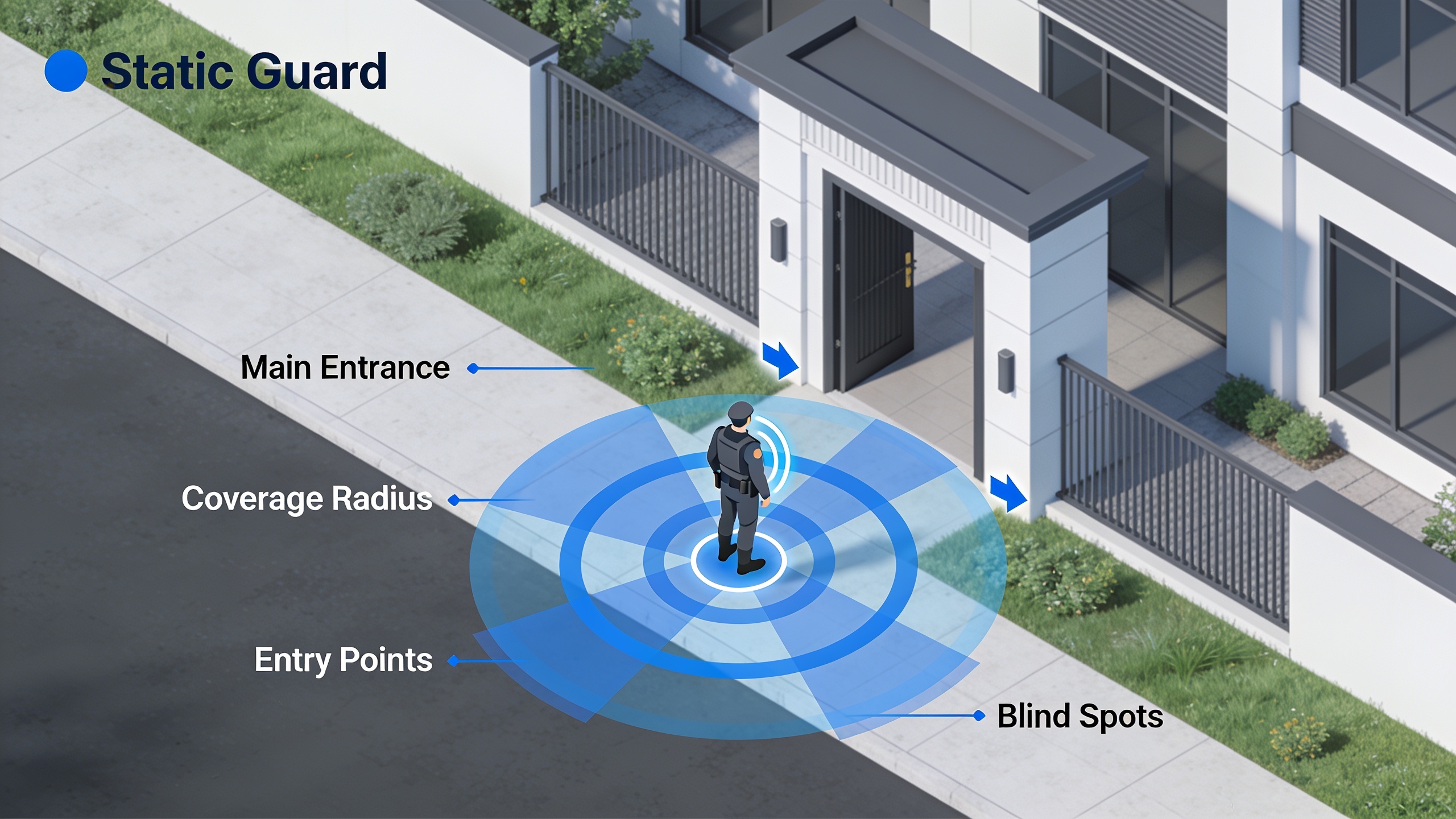
Mobile patrol means one officer driving between multiple properties doing scheduled checks, alarm response, and visible deterrence, while a static guard stays physically planted at a single site, either around the clock or during set hours. The whole thing boils down to presence versus coverage. A static guard gives you a constant body on-site. A mobile patrol trades that constant presence for the ability to cover a lot more ground.
A static guard (sometimes called a stationary officer) usually works out of a guard booth, a front desk, or some kind of fixed post. They watch entrances, check credentials, log who comes and goes, and jump on any incident the second it happens because, well, they're standing right there. You see this model in office buildings, warehouses, gated communities, and big retail centers. Basically anywhere a visible human presence actually means something.
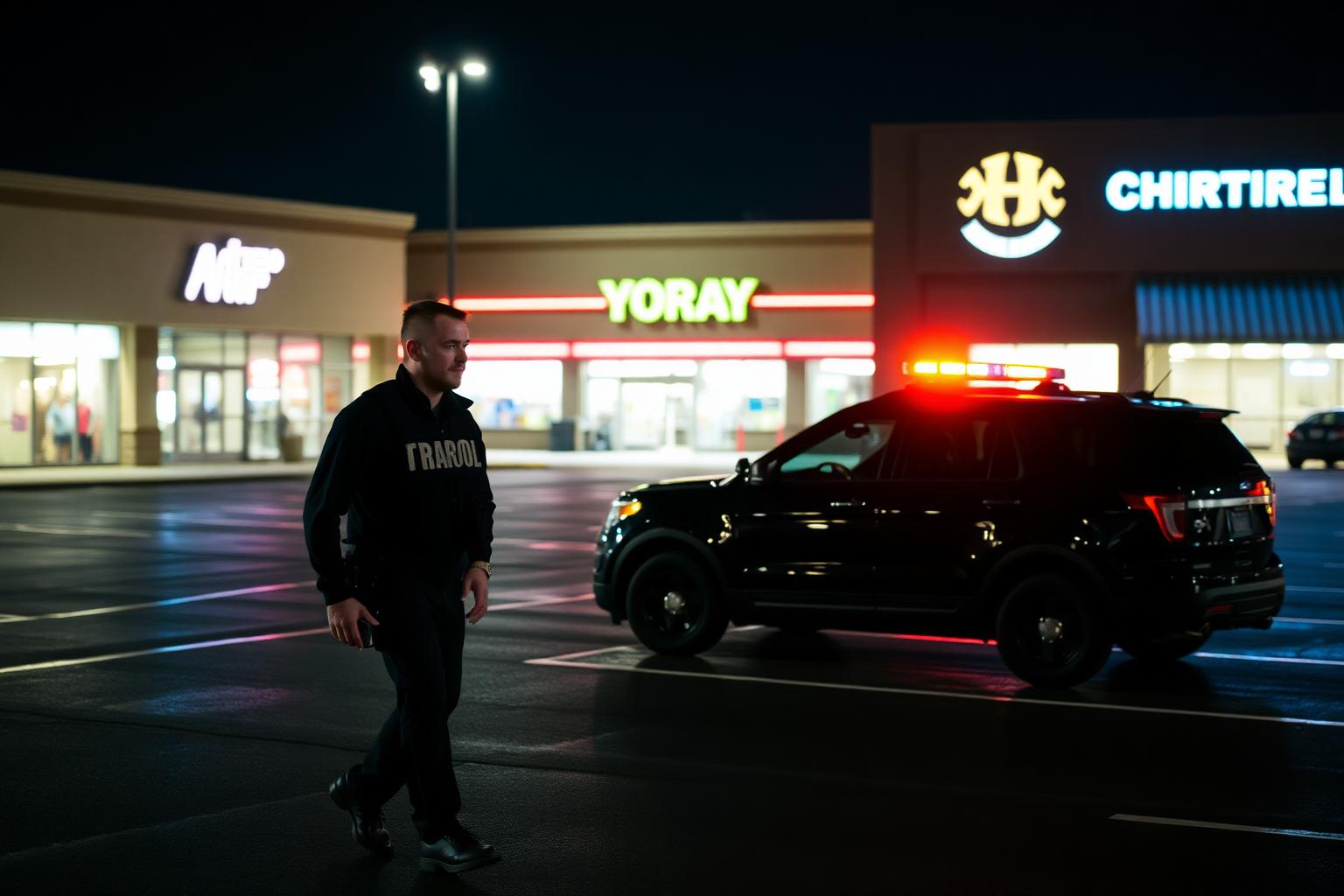
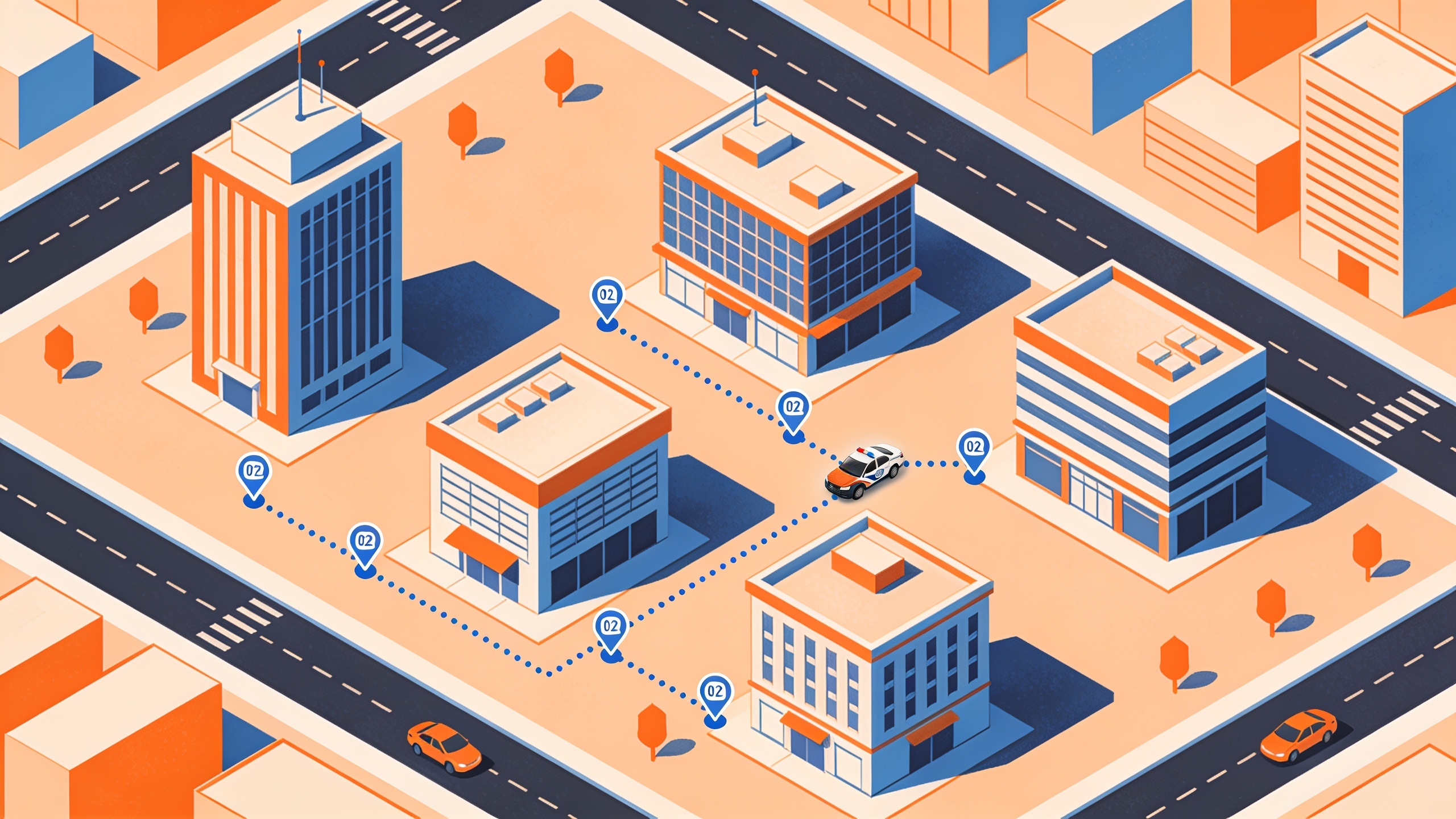
A mobile patrol officer is a totally different animal. They drive a marked vehicle between a set of properties (often somewhere between five and twenty per shift, depending on how big and far apart they are), doing walk-throughs, rattling locks and gates, looking for signs of forced entry, and logging everything with time-stamped reports. This model works great for businesses that don't need eyes on the place every single minute but still want regular, unpredictable checks to spook off anyone thinking about causing trouble.
And honestly, a lot of security patrol services now blend both. A property might run a static guard during business hours when foot traffic is heavy, then switch to mobile patrol overnight once the main threat changes from customer disputes to break-ins and vandalism.
How Much Does Mobile Patrol vs Static Guard Coverage Cost?
Mobile patrol usually costs less per hour than a static guard, plain and simple, because the cost gets split across multiple client properties on the same route. A static guard charges more because that officer is yours and yours alone for the entire shift. For context, the U.S. Bureau of Labor Statistics pegged the median hourly wage for security guards nationally at around $17.67 as of May 2023, and the rate you actually get billed runs higher once you fold in liability insurance, supervision, equipment, and overhead.
Static guard pricing is pretty straightforward: an hourly rate times the number of guards times the shift hours. But it adds up fast. A single unarmed static guard covering an 8-hour shift, seven days a week, can run into thousands of dollars a month once you factor in holiday differentials and overtime when someone calls off.
Mobile patrol bills differently. Instead of paying for continuous hours, you're usually charged per visit, per check, or on a flat monthly rate for an agreed number of patrols a week. Because the officer's labor gets spread across a bunch of sites in the same area, cost comparisons almost always favor mobile patrol for budget-conscious owners with lower-risk properties.
| Factor | Mobile Patrol | Static Guard |
|---|---|---|
| Typical billing structure | Per visit or flat monthly rate for X checks/week | Hourly rate x shift hours |
| Relative cost for single site | Lower | Higher |
| Presence type | Periodic, unpredictable checks | Continuous, fixed presence |
| Best for | Multiple properties, parking lots, closed-hours businesses | High foot-traffic sites, access control needs |
| Response to active incident | Minutes (travel time to site) | Immediate (already on-site) |
| Visibility as deterrent | Random and harder to predict | Constant but predictable |
| Staffing flexibility | Easy to scale up/down patrol frequency | Requires shift coverage/backup staffing |
The gap does shrink for bigger campuses and high-security sites, though. If a single static post has to cover so much ground that you'd need multiple guards anyway, then a smaller static team backed up by a mobile patrol can actually be the more economical way to go. Funny how that works out.
Coverage Area and Property Size Considerations
Static guards fit properties with a single main entrance or a compact footprint where one person can actually keep visual control, while mobile patrols are built for spread-out sites, multiple buildings, or a bunch of separate addresses that would cost a fortune to staff individually. Size and layout should honestly be the first thing you look at.
Take a strip mall with a shared parking lot, a row of tenant storefronts, and a loading area out back. One static guard physically cannot watch the front doors and the loading dock at the same time. But a mobile patrol officer can walk the whole perimeter, hit every entry point, and sweep the lot for sketchy vehicles several times a shift. For sprawling stuff like this, the decision usually tips toward mobile, simply because one fixed post can't see everything at once.
Flip it around, though. An office lobby, a data center, or an apartment complex with one controlled entrance? That's static guard territory all day. Someone checking IDs, running the visitor log, and stepping in immediately when a person tries to slip past the front desk. And here's the part people miss: the value of a static guard in these spots isn't just deterrence, it's active access control. A patrolling officer literally can't do that when they're a mile away checking someone else's building.
Property management companies with buildings scattered across a city tend to mix it up. Static guards at the properties with the most foot traffic or the ugliest incident history, mobile patrol handling everything else on a rotation. It lets them dump the expensive fixed labor where it counts while still keeping a visible presence across the whole portfolio. Smart, if you ask me.
Response Time: Which Model Reacts Faster?
A static guard's response time is basically zero for anything happening at their post, because they're already there, while a mobile patrol's response depends on how far the officer is when the call comes in, usually a few minutes and sometimes up to fifteen or twenty depending on the route and traffic. This is the single biggest trade-off in the whole debate if you're genuinely worried about active theft or violence.
If your nightmare scenario is something in progress, someone smashing a window right now, a fistfight between customers, or a guy trying to kick in a door, then a static guard means intervention happens in seconds, not minutes. That immediacy is exactly why banks, hospitals, and high-value retail almost never rely on patrols alone.
But don't count mobile patrol out. Modern GPS-dispatched units can often beat the police to a triggered alarm, especially in places where public law enforcement takes 30 minutes or more to respond to a non-emergency alarm because they've got bigger fires to put out. If your main risk is opportunistic vandalism, break-ins after closing, or squatters wandering onto a vacant lot, a mobile unit arriving within minutes of an alarm is usually plenty, and a whole lot cheaper than paying for 24-hour static coverage.
One thing worth mentioning: a lot of mobile patrol outfits staff their dispatch and supervisory roles with people who came up through law enforcement or security management, and ongoing training matters here the same way it does in actual policing. Tools like State6, which offers AI-powered promotion coaching for UK police officers, are part of a bigger shift across the security and law enforcement world toward structured career growth and better-trained supervisors. And that trickles down to private security clients, because sharper patrol supervisors usually mean cleaner incident reports and faster escalation when things go sideways.
Which Businesses Benefit Most From Each Model
Small shops worried about after-hours theft, event planners needing coverage for one night, and property managers running multiple sites all have wildly different ideal setups, and matching your business to the right one keeps you from both overspending and leaving dangerous gaps.
Small Business Owners Worried About Theft and Vandalism
A single-location store, restaurant, or small warehouse getting hit with break-ins or vandalism usually doesn't need (and often can't swing) a 24-hour static guard. Mobile patrol is the practical answer here. A vehicle checking the place two to six times a night, at random times so nobody can predict when the next pass is coming, gives you real deterrence for a fraction of the cost. Plenty of providers also pair patrols with alarm monitoring, so an officer gets dispatched automatically the moment a sensor trips instead of waiting for the next scheduled swing-by.
Event Planners Needing Temporary Security
Events are almost always a static guard job, at least while the event is actually running. A wedding, a corporate thing, a concert, a trade show, they've all got a defined perimeter, specific entry points that need credential checks, and a big concentrated crowd. That's exactly where a fixed, visible officer earns their keep. Mobile patrol can help out by covering the parking area or the perimeter roads, but the guts of the event, the doors, the stages, the pinch points where everyone bottlenecks, needs bodies stationed right there.
Property Management Companies
Portfolios spread across multiple addresses are the textbook case for building your program around mobile patrol and only sprinkling in static guards at the highest-risk or busiest individual sites. Picture a company running ten apartment complexes. They might run one nightly patrol route hitting all ten while parking a single static guard only at the complex with the worst incident history. This tiered approach keeps spending in proportion to actual risk instead of slapping the most expensive option on every property uniformly. Which, let's be honest, is what a lot of companies do out of laziness.
Hybrid Security Models: Getting the Best of Both
A hybrid model puts static guards at your critical access points and mobile patrols on the broader perimeter or secondary properties, so you get the instant response of on-site presence plus the wide reach of patrol vehicles without paying full static rates everywhere. For a lot of mid-sized businesses, this is genuinely the right answer rather than forcing yourself to pick one.
A typical hybrid setup on a commercial property might look like this: a static guard working the main lobby or gate during business hours when visitor traffic and access control matter, then switching over to mobile patrol checks every hour or two after closing, when the threat shifts from managing legit visitors to keeping burglars out. You end up paying premium static rates only during the hours that actually need a constant body.
Technology has made these hybrid setups way easier to run, too. GPS tracking lets you verify patrol routes and timestamps in real time, video-monitored guard booths can prop up a lighter on-site staffing plan, and centralized dispatch means a mobile officer can get redirected to any property in the network the second an alarm goes off. This kind of integrated approach is pretty much standard now among the established patrol services, not some fancy upsell they tack on at the end.
While you're evaluating any contract, hybrid or not, it's worth thinking about how you're going to pay for and budget this stuff over time, especially as more vendors start playing with flexible billing and even alternative payment methods. The same way some industries are poking at how digital assets and blockchain-based payment systems might tidy up vendor billing (a topic covered by outlets like Cryptocoinsjournal), security contracts are slowly modernizing their invoicing and reporting, which makes it a lot easier to see exactly what you're paying for and when patrols actually happened.
How to Choose the Right Fit for Your Property
Choosing between mobile patrol and static coverage really comes down to answering four questions honestly: how big and spread out is the property, which hours carry the most risk, how fast do you realistically need a response, and what can you actually afford every month. Work through them in order and the answer usually shows up on its own.
Start with the layout. One main entrance and a tight footprint? Static will feel natural and work well. Sprawling, multiple buildings, or one of several sites you manage? Mobile patrol will stretch your money way further while still keeping people honest.
Then map your risk by time of day. A ton of businesses figure out their real danger window is actually narrow, say midnight to 5 a.m. when the place is empty, which means paying for 24-hour static coverage would be flushing money down the drain. A patrol scheduled tight around that window, maybe with a short static shift during business hours for customer-facing access control, tends to match the real risk a lot better than an all-or-nothing plan.
Next, be honest with yourself about how fast you actually need someone there. If an incident dragging on even two or three minutes could mean serious loss, cash handling businesses, jewelry stores, places holding valuable inventory, that's a strong argument for static guards during operating hours. But if your bigger worry is opportunistic vandalism or break-ins after you've locked up and gone home, the few minutes it takes a mobile unit to roll up rarely changes anything, since most break-ins get scared off by the mere sign that any patrol activity or visible security exists at all.
And please, get quotes for both models based on your specific property before you commit. Any decent patrol service will walk your site, look at your entry points and blind spots, and recommend an actual plan instead of pushing whatever's most profitable for them. If a provider won't do a site assessment before quoting you a flat rate, that's a red flag. Walk away.
One more thing worth keeping in mind: security needs shift with volume and seasonality, a lot like inventory does in retail and wholesale. The way bulk suppliers such as t7b tweak their distribution and stocking around demand cycles, you should revisit your coverage every so often. A retailer that only needs mobile patrol during the slow months might want to add static coverage during the holiday rush, when both inventory value and foot traffic spike at the same time.
Frequently Asked Questions
Is mobile patrol actually cheaper than a static guard?
Yeah, in pretty much every case mobile patrol costs less per property than a dedicated static guard, because the officer's time and vehicle costs get split across a bunch of client sites on the same route. A static guard, on the other hand, gets paid for continuous hours tied to one single location, which is what jacks up the hourly cost.
Can I switch between the two later on?
Most providers let you adjust as your risk changes, like bumping up to static coverage during a busy holiday stretch and dropping back to mobile patrol the rest of the year. Just talk through the flexibility before you sign, because some contracts lock you into a fixed staffing level for a set term and you don't want to find that out the hard way.
How often does a mobile patrol really check a property?
It's whatever you negotiate in the contract, usually a couple of checks a night for low-risk places up to hourly for higher-risk sites, with the visit times randomized so nobody can figure out the pattern. Any decent provider should hand you time-stamped logs or GPS reports so you can actually confirm the checks happened.
Do static guards need to be armed?
No. Static posts are usually staffed with unarmed officers, especially in retail, office, and residential settings where the job is access control, monitoring, and deterrence rather than an armed response. Armed static guards are typically saved for higher-risk stuff like banks, cash-in-transit, or facilities storing high-value or dangerous materials, and they cost more thanks to the extra licensing and insurance.
What's better for event security, mobile patrol or static guards?
Static guards win for the core of an event because they can staff the entrances, check credentials, and react instantly to a disturbance in a packed crowd. Mobile patrol is a handy supplement for the parking lots, perimeter roads, or overflow areas around the edges.
---
There's no universal winner here, and anyone who tells you otherwise is selling something. The right call depends on your layout, your actual risk windows, and how much you genuinely need a constant body versus broad coverage. A lot of businesses end up finding that a thoughtful mix of both, adjusted with the seasons and reviewed now and then, protects more per dollar than going all-in on either one. Whatever you land on, insist on a proper site assessment, clear reporting, and a contract that lets you adjust as your business and your risks change. Don't let anyone rush you past those three things.