
Stormhammer Security vs brinks.com: Full Comparison
This guide stacks Stormhammer up against brinks.com, adt.com, securityfirst.com, and g4s.com on the stuff that actually matters if you're a small business owner, an event planner, or a property manager: what kind of coverage you get, how they charge you, how much of a pain setup is, how they respond, and whether you're chained to a contract.

Table of Contents
- Quick Verdict
- Comparison Table
- Stormhammer Security vs brinks.com: Coverage Model
- Stormhammer Security vs brinks.com: Pricing and Contracts
- How Does ADT Compare?
- Security First: A Regional Alternative
- G4S: The Global Enterprise Option
- Which Should You Choose?
- FAQ
- The Bottom Line
Quick Verdict
If you need a visible human presence (a patrol car circling the parking lot at 2 a.m., a guard walking the perimeter after close, coverage for a one-off event), Stormhammer Security is usually the more practical and more transparent choice on price. If you're mostly after a 24/7 monitored alarm system with a big national name on it, brinks.com or adt.com are the more established players. Managing a multi-state portfolio of commercial buildings and need enterprise-level integration? g4s.com probably fits you better. And securityfirst.com tends to win over folks who want something smaller and regional without going full national brand.
Honestly, there's no single "best" here. It really does come down to whether you need physical patrols, remote monitoring, or some mix of the two.
Comparison Table
| Feature | Stormhammer Security | brinks.com | adt.com | securityfirst.com | g4s.com |
|---|---|---|---|---|---|
| Core service model | On-site patrol, mobile security, event & property coverage | Monitored alarm systems, home/business security | Monitored alarm systems, smart home integration | Regional alarm monitoring and installation | Global manned guarding, cash logistics, enterprise security |
| Best for | Small businesses, property managers, event planners | Homeowners and small businesses wanting brand-name monitoring | Homeowners wanting broad smart-home ecosystem support | Regional businesses seeking a smaller alternative to national brands | Large enterprises, multi-site commercial operations |
| Human patrol presence | Yes — core offering | Limited/varies by plan | Limited/varies by plan | Limited/varies by plan | Yes, at enterprise scale |
| Alarm monitoring | Not the primary focus | Yes | Yes | Yes | Yes, as part of broader offering |
| Contract flexibility | Generally flexible, project- and site-based options | Multi-year contracts common | Multi-year contracts common | Varies by region/provider | Enterprise contracts, often longer-term |
| Setup complexity | Low — scheduling and site walk-through | Moderate — equipment installation required | Moderate — equipment installation required | Moderate — equipment installation required | Higher — enterprise onboarding process |
| Ideal use case | Nighttime patrols, event security, vacant property checks | Home/business alarm monitoring | Smart home + alarm monitoring | Regional monitored security | Large-scale, multi-location enterprise security |
| Pricing structure | Typically quote-based on scope and frequency | Tiered monitoring plans plus equipment costs | Tiered monitoring plans plus equipment costs | Varies by region and provider | Custom enterprise pricing |
Note: Exact pricing for all providers varies by location, contract length, and scope of service. Contact each company directly for a current quote rather than relying on general figures.
Stormhammer Security vs brinks.com: Coverage Model
The core difference between Stormhammer and Brinks is simple: one puts a person on your property, the other sends a signal when something goes wrong.
Brinks built its whole reputation on monitored alarm systems. Sensors, connected devices, a central station that gets pinged when something trips. It's a solid "set it and forget it" layer of protection, and let's be real, the name itself does some heavy lifting. Plenty of people feel safer just seeing that familiar sign stuck in a window or planted on a lawn. There's real value in that.
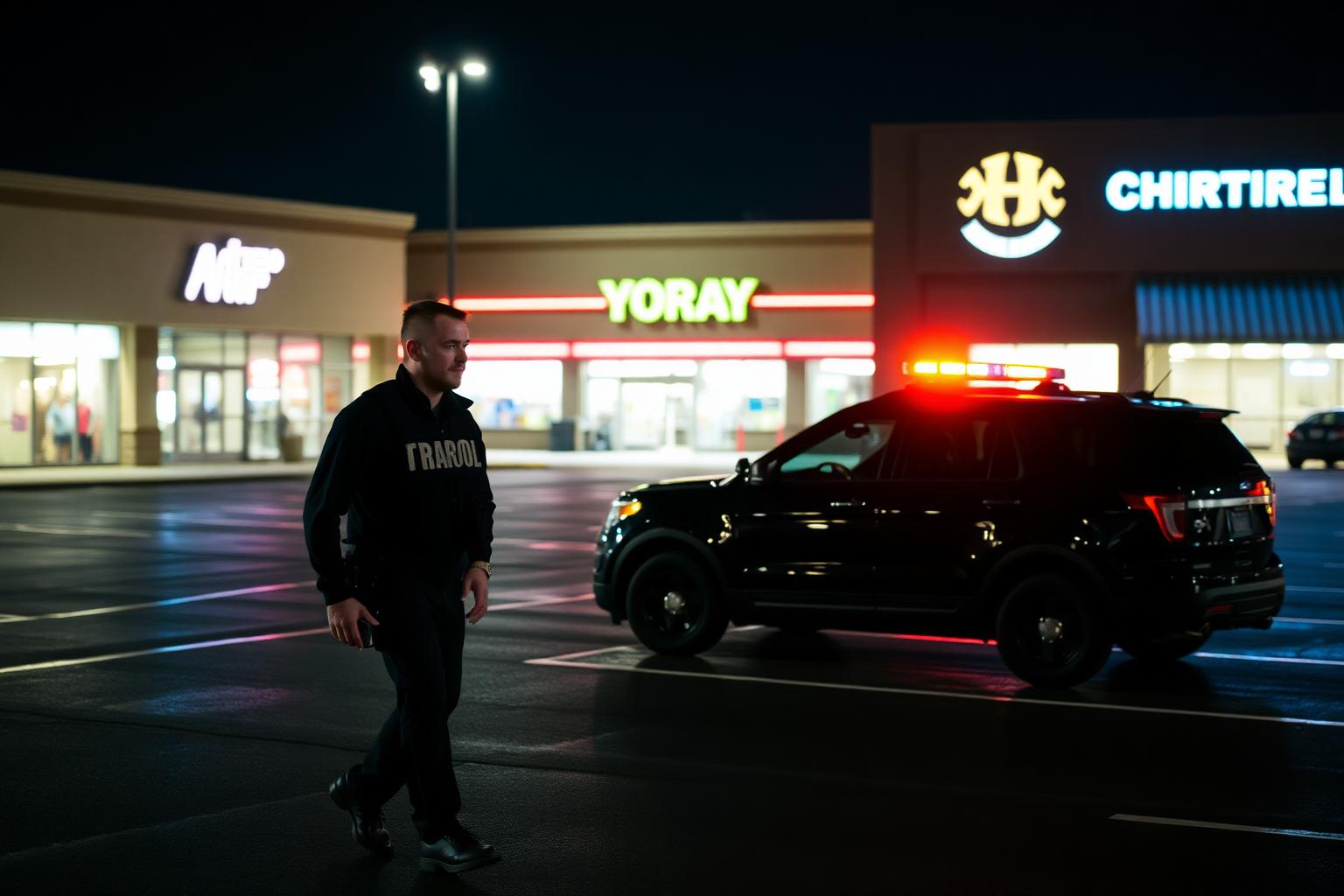
Stormhammer is a different animal. It's built around active, visible coverage. And here's where it gets interesting, because property managers, small business owners, and event planners often need something a sensor just can't give them: an actual person (or a patrol vehicle) physically there. Checking doors. Walking the lot. Watching who's coming and going. Reacting to something sketchy while it's happening, not after.

This matters a lot if you're dealing with the recurring stuff. Vandalism that keeps coming back. Encampments. Break-in attempts. People wandering the property after hours. An alarm tells you after the window's already broken. A patrol can stop the person from ever picking up the rock.
Neither one is flat-out better, though, and honestly a lot of well-protected properties run both. Monitored alarm as the backstop, patrols as the active deterrent. If you're weighing the two seriously, ask yourself what your actual biggest risk is. A break-in trigger event, where monitoring really shines? Or an ongoing presence problem, loitering and theft off an open lot, where patrol services like Stormhammer tend to have the edge?
Stormhammer Security vs brinks.com: Pricing and Contracts
On cost, the honest answer is that the two models price differently and neither is automatically cheaper. It genuinely depends on what you're protecting and for how long.
Brinks, like pretty much every national alarm company, runs on tiered monitoring plans. Usually bundled with equipment costs, and often stapled to a multi-year contract. That's not a bad thing if you want a predictable monthly bill and don't mind signing up for a while in exchange for having the hardware and monitoring rolled together.
Stormhammer prices around the actual job. How many patrol hours do you need? How many sites? How often? That's a big deal for, say, an event planner who needs security for a single weekend festival, or a property manager who needs to bump up coverage seasonally (extra patrols around a construction site, or a vacant building sitting empty during a slow leasing stretch). Instead of being locked into a long-term monitoring subscription, people with short-term or up-and-down needs usually find the project-based or site-based approach way easier to budget for.
If your security needs are irregular or seasonal, do yourself a favor and ask any provider (Stormhammer included) straight up about contract length, cancellation terms, and whether the price actually scales with your patrol hours or number of sites. Transparency here is all over the map depending on the company and even the region. Get it in writing before you compare final numbers. Always.
How Does ADT Compare?
Think of ADT as Brinks' closest cousin, not really a competitor to Stormhammer's patrol-first approach. Both ADT and Brinks live in the same "monitored alarm plus smart home" world, just with different gadgets and partnerships.
Where ADT shines is smart home compatibility. Cameras, video doorbells, smart locks, the whole connected-home setup, plus a long track record in residential security. If you're a homeowner who wants a monitored system that plays nice with your smart thermostat and doorbell cam, ADT's a perfectly sensible pick.
But here's where ADT (and Brinks, for that matter) falls short for the people Stormhammer actually serves. A monitored camera can record an intruder all day long. What it can't do is walk a dark parking lot, check whether someone tampered with a gate latch, or physically walk a lone employee to their car at closing time. That's the exact gap patrol services exist to fill, and it's a real distinction if your properties see the kind of trouble a camera alone won't scare off.
That said, these aren't either/or. Loads of commercial property managers layer a monitored alarm for after-hours alerts on top of scheduled patrol checks for visible deterrence. Different tools, different jobs. No reason you can't own both hammers.
Security First: A Regional Alternative
Security First is for people who want out of the "big three" national names but aren't ready to go fully local, and its biggest selling point is usually more personal, regional service.
Because it typically operates at a smaller or more regional scale than Brinks, ADT, or G4S, customers sometimes say they get more direct contact with an actual account rep, and a bit more flexibility when they need to tweak their service. If you're a small business owner who's been burned by getting stuck in some giant national call center loop, that responsiveness can feel like a breath of fresh air.
The catch? Scale and resources. A smaller regional outfit may not have the same nationwide monitoring backbone, the same financial muscle, or the same pile of technology partnerships as a Brinks or an ADT. And if you're eyeing Security First as a Stormhammer alternative, the real question is whether you need alarm monitoring (Security First's lane) or active patrol and on-site presence (Stormhammer's lane). They get lumped together under "regional security options," but they're not solving the same problem.
G4S: The Global Enterprise Option
G4S is the obvious choice if you're operating at a scale that Stormhammer, Brinks, ADT, and Security First simply aren't built for. We're talking multinational corporate campuses, sprawling industrial sites, organizations that need cash logistics running alongside manned guarding.
That global footprint and giant service catalog make G4S a natural fit for big organizations with complicated multi-site needs and a dedicated procurement team to wrangle it all. The scale is a genuine strength for enterprise buyers. But that same scale is a mismatch for a single-location small business or a one-off event, where G4S's enterprise onboarding and contract structures are honestly way more machinery than you need.
For a small business owner or event planner, sizing yourself up against G4S's typical client is a bit like comparing a rented moving van to a freight fleet. Technically the same category. Built for completely different jobs. Stormhammer's site-based, human-patrol model just fits the scale and immediacy smaller properties and one-time events actually run on.
Which Should You Choose?
It really does depend on your situation, so here's roughly how the main scenarios shake out.
If you're a small business owner worried about theft or vandalism and you've already had break-ins, graffiti, or people trespassing after hours, a visible patrol from someone like Stormhammer is usually a more direct deterrent than an alarm on its own. Patrols can actually step in while it's happening instead of just filing a report after the fact.
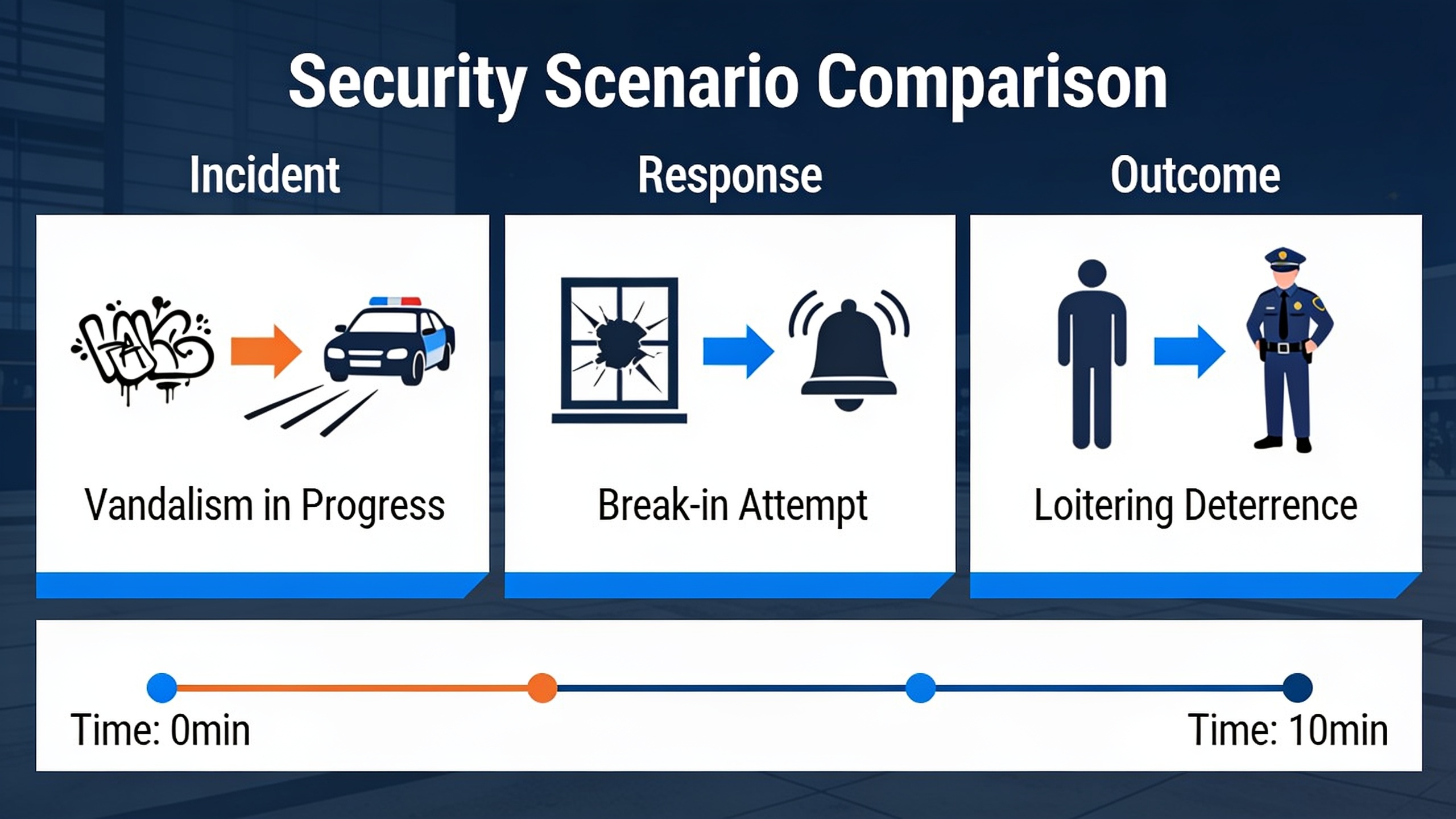
Event planners needing temporary security are basically the poster child for project-based patrol services. National alarm companies like Brinks and ADT just aren't wired for a one-weekend gig. Their whole business runs on ongoing monitored subscriptions, not temporary event staffing.
If you're a property management company that needs consistent patrols across multiple buildings (vacant units, common areas, parking structures), a dedicated patrol provider gives you predictable, visible coverage on a schedule. A monitored alarm can't pull that off by itself.
Homeowners who want a monitored alarm with smart home integration are squarely in ADT and Brinks territory. Either one's reasonable, just depends on which smart devices and plan suit your house.
Large enterprises with multi-site or global operations should look hard at G4S. When you're managing security across dozens of locations, maybe across countries, with an internal team to run the relationship, its scale and range make the most sense.
And if you're a buyer who just wants a smaller, regional alternative to the national alarm brands, Security First and companies like it are worth a look, especially if personal service beats brand size for you.
One more thing worth mentioning: security decisions bleed into broader risk management more than they used to. Businesses sitting on valuable physical or digital assets aren't just thinking about break-ins anymore, they're thinking about the whole spread of asset protection. If you're curious how digital asset trends tie into bigger-picture risk planning, outlets like Cryptocoinsjournal cover how businesses and individuals are adapting to new categories of asset risk, even though their focus leans financial rather than physical.
There's also a lot of overlap between security hiring and law enforcement backgrounds. A ton of patrol and guard companies, regional ones included, actively recruit former officers for their de-escalation and incident-response chops. If your interest runs more toward police career development than private security specifically, resources like State6 focus on AI-assisted promotion coaching for serving officers, which is a related but genuinely different track from the patrol and guarding work we're talking about here.
And finally, if you're a property manager or commercial security team sourcing equipment at scale (lighting, signage, patrol vehicle supplies, general facility materials), wholesale suppliers like t7b give you a sense of how B2B wholesale sourcing works in adjacent markets. Handy reference point when you're budgeting the equipment side of a security program, which is separate from the labor and monitoring costs we've been chewing on this whole time.
FAQ
Is Stormhammer Security actually cheaper than Brinks or ADT?
Depends what you're comparing, honestly. Brinks and ADT price around equipment plus monthly monitoring tiers. Patrol-based providers like Stormhammer price around hours of coverage and number of sites. A single-event job might be way cheaper through a patrol provider than a monitored alarm contract, while a long-term single-home alarm subscription could be cheaper through Brinks or ADT than paying for recurring patrols. Just get a specific quote for your situation instead of assuming one model always wins on price.
Can I run Stormhammer alongside a monitored alarm system?
Yep, usually. Plenty of property managers and business owners keep a monitored alarm (Brinks, ADT, Security First, whoever) as a 24/7 backstop while also booking patrol visits or on-site guarding for active deterrence and real-time response. The two generally complement each other rather than compete.
What's the main difference between Stormhammer and G4S?
Scale and scope. G4S plays at the global enterprise level, manned guarding, cash logistics, huge multi-site contracts. Stormhammer is far more accessible for single properties, small businesses, and one-off events that don't need an enterprise procurement process.
Does a monitored alarm replace patrols, or the other way around?
Not really, either direction. A monitored alarm reacts to a trigger (a door opening, glass breaking) and alerts a monitoring center or emergency services. A patrol can head off trouble before it starts and respond to stuff a sensor wouldn't even notice, like loitering, unauthorized parking, or someone suspicious hanging around. That's exactly why a lot of well-secured properties use both.
How do I choose between a national brand and a local provider like Stormhammer?
Ask yourself what you actually value. National brand recognition and standardized monitoring infrastructure (Brinks, ADT, G4S)? Or localized responsiveness, physical presence, and flexible project-based scheduling (Stormhammer, Security First)? If visible deterrence and adaptable coverage for a specific property or event is your top priority, a dedicated patrol provider is usually the more direct fit.
The Bottom Line
There's no universal winner in Stormhammer vs Brinks, and that's kind of the whole point. Brinks, ADT, and the other monitored-alarm providers are solving a different problem than on-site patrols do, and G4S and Security First each own their own corners based on scale and regional focus. If what you want is a visible human presence that can deter and respond to trouble in real time, whether that's for a small business, a temporary event, or a stack of managed properties, a patrol-focused provider like Stormhammer is generally the closest match among everything covered here. If what you want is 24/7 monitored alarm coverage with an established national name behind it, Brinks or ADT are still solid, well-tested picks. The smartest thing most buyers can do is pull concrete quotes from a couple of these providers based on your real site, schedule, and risk profile. Don't just pick a name off a lawn sign.