Hospital security Sacramento: a facility manager's guide
Healthcare facilities need a different kind of security. This guide covers hospital security in Sacramento — from ED de-escalation and ICU watch posts to clinic patrols and MOB parking decks — with a checklist to hire the right unarmed, de-escalation-first team.
Why healthcare security is different
Hospitals are the highest-acuity de-escalation environment in private security. Patients in crisis, families in grief, intoxicated arrivals, and behavioral-health holds all share space with clinicians who cannot be cleared. A firearm in that mix increases liability and clinical risk that no insurer prices favorably. The right healthcare security patrol uses verbal containment, safe positioning, and documented non-lethal response — with Sacramento PD escalation when force is truly required.
Facilities this guide applies to
Acute-care hospitals
ED triage, ambulance bays, behavioral-health intake, ICU watch posts, and visitor-control points. De-escalation-first coverage for high-acuity environments.
Urgent care centers
After-hours lobby control, patient flow management, parking-lot patrol, and lock-up checks. Fast deployment for stand-alone clinics across Sacramento.
Medical office buildings (MOBs)
Multi-deck parking structure tours, after-hours access control, and tenant lock-up. GPS-tracked stops deter auto burglary and loitering.
Surgery & outpatient centers
ASC, dialysis, infusion, and OB-GYN clinic patrols. Controlled-substance escort, staff escort to vehicles, and alarm response.
Behavioral-health units
Unarmed observation officers trained in patient-rights boundaries, de-escalation, and safe positioning. Report safety events only — never clinical content.
Pharmacy & controlled-substance escort
Documented officer escort for controlled-substance transfers between pharmacy, ED, and nursing stations. Chain-of-custody logging every leg.
6-point healthcare security checklist
Before you hire a hospital security provider in Sacramento, run them through this checklist. Clinical liability, patient privacy, and survey readiness make these six items non-negotiable.
Confirm CA BSIS PPO license + active guard cards
Every legitimate healthcare security provider in California must hold a BSIS Private Patrol Operator license and only deploy officers with current Guard Cards. Verify the PPO at bsis.ca.gov. Stormhammer's PPO is 121830.
Require healthcare-specific training
Hospital security is not retail security. Officers should have de-escalation, verbal intervention, behavioral-health awareness, HIPAA confidentiality, and non-lethal physical-control training (such as PPCT).
Verify general liability and workers' comp
Request a Certificate of Insurance naming your facility as additional insured. Minimum $1M general liability and valid workers' compensation for every officer are non-negotiable in a clinical environment.
Demand GPS-tracked, photo-verified patrol logs
A modern medical-facility patrol should deliver time-stamped GPS tour maps and photo evidence of every stop within 24 hours. Paper-only logs leave you blind if an incident is reviewed by risk management or a surveyor.
Confirm unarmed-by-policy and clear escalation rules
Firearms increase liability in clinical settings. The best healthcare security providers are unarmed by default and escalate to Sacramento PD when force is required. Ask to see the written use-of-force and escalation policy.
Check board-ready, compliance-friendly reporting
Incident reports should reach your risk-management and security-administrator contacts quickly, include witness info and photo evidence, and be formatted for Joint Commission / DNV environment-of-care reviews.
What unarmed officers do in a Sacramento hospital
ED triage & ambulance bay
Fixed officers manage patient flow, de-escalate verbal aggression, and monitor the ambulance entrance during peak intake hours (18:00–02:00).
ICU & behavioral-health watch
Unarmed observation officers provide a second set of eyes for at-risk patients while respecting patient-rights boundaries and clinical staff authority.
MOB parking-deck patrol
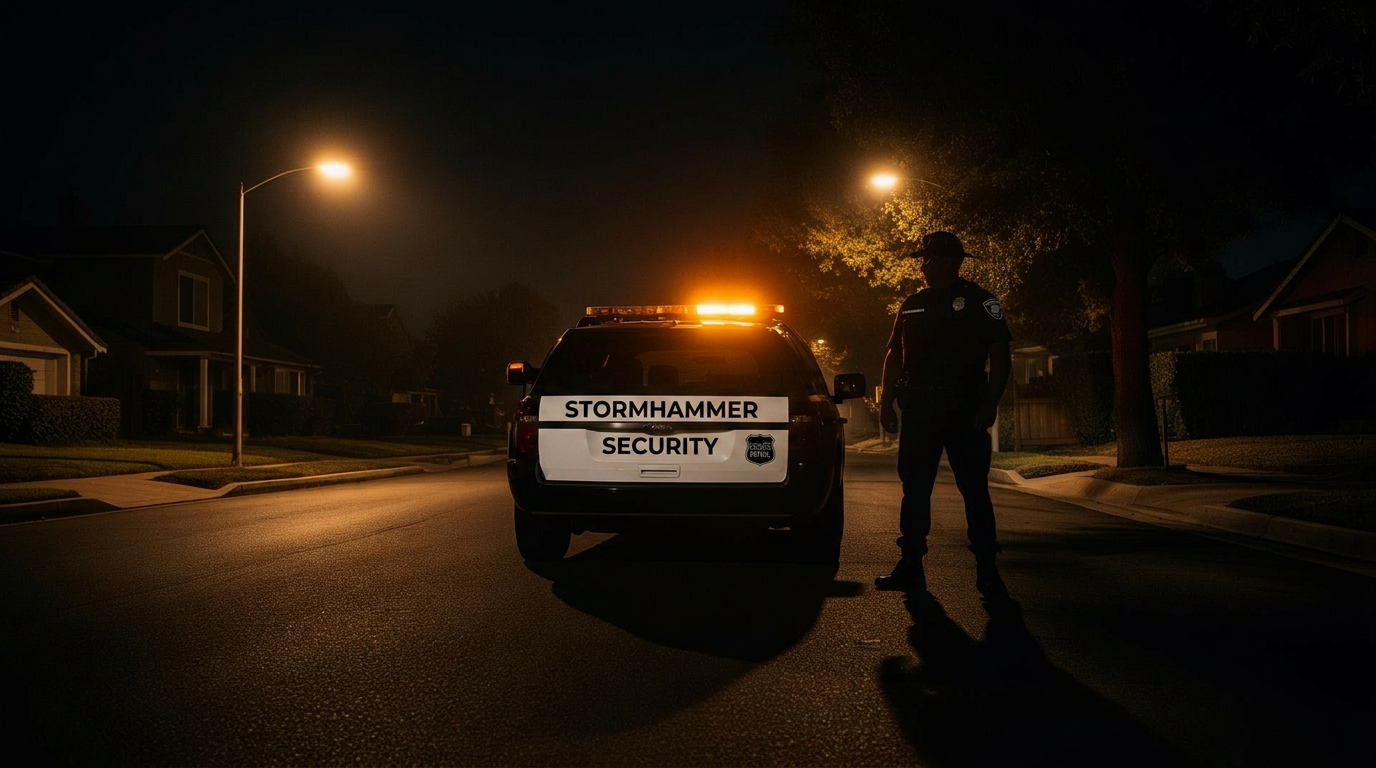
Randomized marked-vehicle tours of medical office buildings and parking structures, with photo-verified stops to deter auto burglary and after-hours loitering.
Visitor & lobby control
Front-desk officers screen visitors, manage badge issuance, enforce visiting hours, and coordinate restraining-order alerts with facility administration.
Healthcare security FAQ
What makes hospital security different from other security services?+
Healthcare settings combine high-stress patients, visiting families, behavioral-health holds, controlled substances, and strict privacy rules. Hospital security must prioritize de-escalation, HIPAA awareness, and non-lethal response over force.
Should hospital security guards be armed in Sacramento?+
Most Sacramento hospitals, clinics, and medical office buildings are best served by unarmed guards. Firearms add liability and clinical risk in settings where patients may be in crisis, confused, or combative. Armed response should be escalated to Sacramento PD when necessary.
What training should a healthcare security guard have?+
Look for California BSIS Guard Card, de-escalation and verbal-intervention training, HIPAA confidentiality training, and experience in healthcare environments. Pressure Point Control Tactics (PPCT) or similar non-lethal control training is a plus.
How do you handle aggressive patients or visitors in the ED?+
De-escalation first — verbal containment, team positioning, and exit-pathway management. Physical intervention is only used as a last resort under California Penal Code §835a and facility policy, then documented within 30 minutes.
Can security guards patrol medical office buildings and urgent cares?+
Yes. Marked, GPS-tracked patrols cover MOBs, urgent care centers, dialysis clinics, and surgery centers after hours — deterring auto burglary, loitering, and unauthorized access while providing photo-verified logs.
How much does healthcare security cost in Sacramento?+
Mobile patrol of a clinic or MOB starts at $15 per tour. Fixed unarmed posts in EDs, ICUs, or lobbies typically run $26–$34 per hour depending on shift and credentialing. Call (530) 902-9390 for a written quote.