10 Signs Your Business Needs Security Patrol Services
Broken locks. A car that keeps showing up in your lot after everyone's gone home. Inventory numbers that don't add up anymore. If any of that sounds familiar, you're already staring at security problems that most owners talk themselves out of taking seriously.
That's the tricky part. These things creep in one at a time, so it's easy to shrug off each one as a fluke. The broken lock was probably just wear and tear. The weird car was probably somebody waiting for a friend. But strung together, they tell a story, and catching that story early is often the difference between a minor annoyance and a break-in, a lawsuit, or a reputation you spend the next year rebuilding.
So let's go through the ten warning signs I see most often, and I'll tell you when it actually makes sense to bring in patrol services instead of just buying more cameras and hoping for the best.
Table of Contents
- Why Business Security Signs Matter More Than Ever
- Sign 1: Attempted or Actual Break-Ins
- Sign 2: Vandalism and Graffiti
- Sign 3: Suspicious Loitering or Repeat Trespassers
- Sign 4: Rising Employee or Inventory Theft
- Sign 5: A Location in a High-Crime or Isolated Area
- Sign 6: Large Events or Seasonal Crowds
- Sign 7: Employee or Customer Safety Complaints
- Sign 8: Unmonitored After-Hours Operations
- Sign 9: Rising Insurance Premiums or Claims
- Sign 10: Expansion, New Construction, or Multiple Properties
- Quick Self-Assessment
- Types of Security Patrol Services Compared
- What Happens If You Ignore These Warning Signs?
- FAQ
Why Business Security Signs Matter More Than Ever
These warning signs matter because they're early indicators of risk, and risk that goes unaddressed almost always gets worse, not better. An unlocked gate or an alarm nobody responds to isn't just a maintenance headache. It's a data point. And a bunch of data points together tell you exactly how exposed your property really is.
Retail theft, commercial burglary, and vandalism haven't gone anywhere. They're still a constant grind for small and mid-sized businesses. The National Retail Federation's annual retail security survey shows that shrink, which lumps together theft, fraud, and general loss, keeps eating up a meaningful chunk of retail sales year after year. That's a big reason so many retailers have been pouring more money into loss-prevention staff and patrol services. The owners who learn to read these signals early are in a completely different position than the ones who wait around for something to go wrong.
Sign 1: Attempted or Actual Break-Ins
Any break-in, whether it succeeded or not, is the loudest warning sign there is, and it should trigger a security review immediately. Forced doors, tampered locks, a disabled alarm panel, pry marks on a window frame. Even if nothing walked out the door, you've got a problem.
Here's what people don't realize: burglars often "test" a place first. They'll poke at it to see whether the alarm actually does anything and how long it takes for a human to show up. If your business has had even one failed attempt, the odds you'll get hit again in the coming months go up, especially if you left the same weak spots wide open. This is exactly where visible patrol earns its keep. Uniformed officers, marked vehicles, randomized rounds — it wrecks the predictability that criminals are counting on, and predictability is basically their whole game.
Sign 2: Vandalism and Graffiti
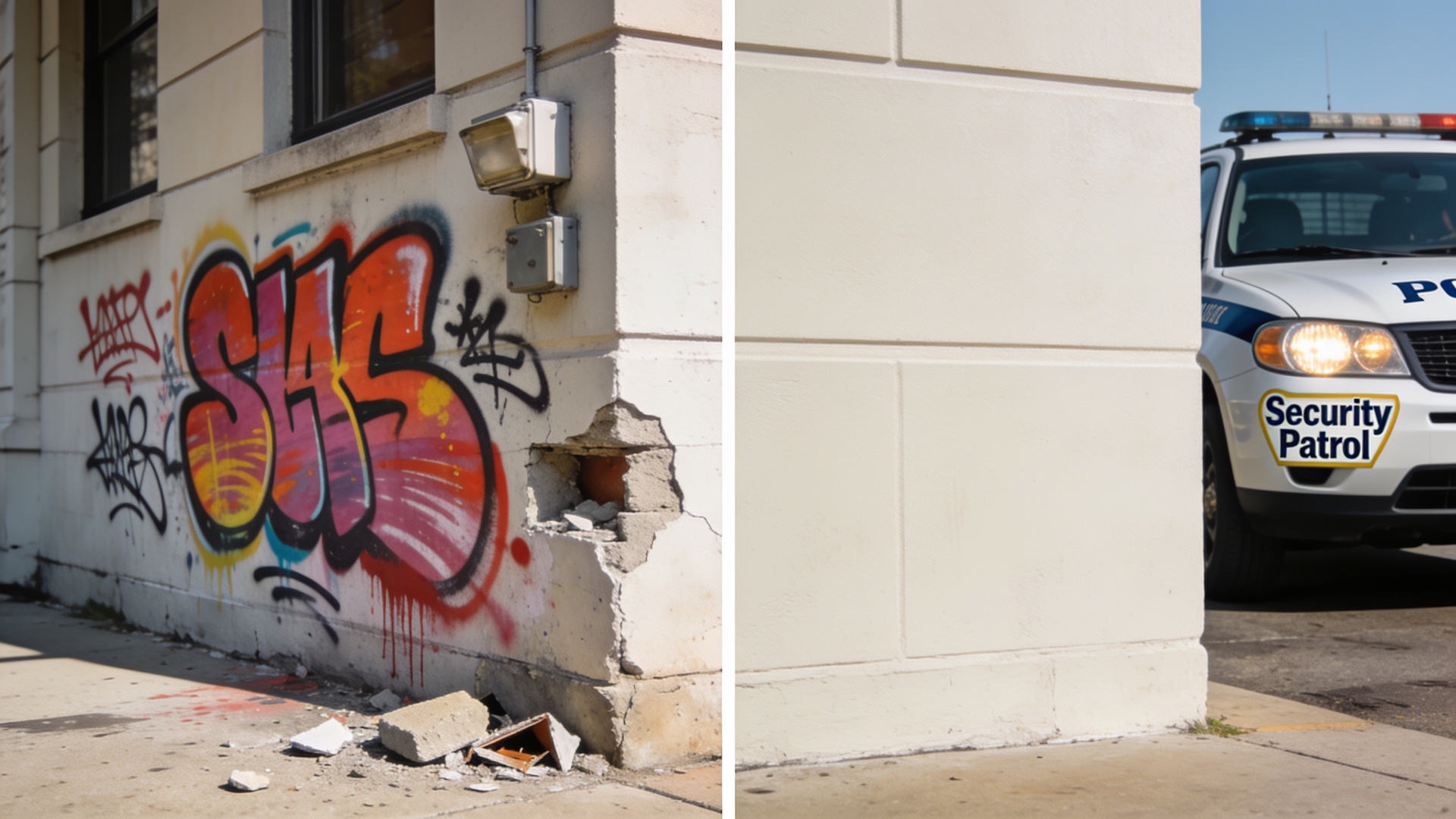
Vandalism is a signal that your property reads as an easy, unwatched target. Graffiti, busted windows, slashed tires, a wrecked sign out front. This kind of low-level stuff tends to come before the serious incidents like theft or arson, because it proves to everyone watching that nobody's paying attention.
Graffiti's especially worth watching. Sometimes it's marking territory for local gang activity, and sometimes it's basically a scouting signal telling other opportunists the place is fair game. If you're getting hit with the same minor tagging every couple of weeks, that's not random. Scheduled patrol checks during the hours it actually happens (usually late night or those dead early-morning hours when nobody's around) tend to shut it down fast.
Sign 3: Suspicious Loitering or Repeat Trespassers
Unfamiliar people hanging around your entrances, loading docks, or parking areas over and over — especially after you've closed — is one of the quieter warning signs but honestly one of the most telling. Loitering by itself isn't illegal. But a pattern? The same faces coming back, watching when your employees clock out, jiggling door handles? That's surveillance. Somebody's casing your property.
Your employees and managers usually spot this before anyone else does. The problem is there's rarely a real system for reporting it, and even less of a deterrent, so those little observations just evaporate. A uniformed patrol presence flips that on its head immediately. Most casual trespassers and would-be thieves won't touch a property where they know a marked vehicle or officer swings by on the regular. Why bother when the place next door is easier?
Sign 4: Rising Employee or Inventory Theft
An unexplained bump in shrinkage, register discrepancies, or supplies that keep vanishing usually points to internal theft, external theft, or some ugly combination of the two — and it's a strong sign you need boots on the ground rather than just footage to review later. Cameras help you figure out what happened after the money's already gone. They don't stop the money from going.
Ask anyone in loss prevention and they'll tell you the same thing: a visible deterrent kills opportunistic theft way more effectively than any after-the-fact investigation. An officer doing scheduled walk-throughs of your stockroom, loading area, and parking lot can catch the weird stuff early. Unauthorized after-hours access. Shrinkage that mysteriously lines up with one particular shift. You want to catch that before it quietly bleeds you for thousands of dollars a year.
Sign 5: A Location in a High-Crime or Isolated Area
Sometimes the risk has nothing to do with anything inside your building. If you're operating somewhere with a documented history of property crime, or in a spot that's just physically isolated (bad lighting, no neighbors, no street visibility), your exposure goes way up no matter how solid your locks are.
Industrial parks, standalone retail pads, properties sitting next to a vacant lot. These are the ones that get hit, because there's nobody around during off-hours to notice a thing. So here's my take: if your local police crime stats show elevated burglary or vehicle break-in numbers in your zip code, that alone is enough to justify scheduled patrol coverage. You don't need to wait until something actually happens at your address. The neighborhood already told you what you need to know.
Sign 6: Large Events or Seasonal Crowds
Hosting a big gathering, a seasonal sale, a high-traffic promotion? You're creating temporary security gaps that your normal staffing was never built to handle. This one's huge for event planners specifically, because you need coverage that scales up for the exact hours and headcount of the event and then scales right back down when it's over.
Crowds crank up the odds of theft, fights, medical emergencies, and people wandering into places they shouldn't be. Backstage areas, cash-handling stations, the VIP section. Event-based patrol lets you bring in trained people for exactly the window you need, whether that's a wedding reception, a product launch, or a holiday market, without signing up for some long-term contract you don't want. If you're stuck deciding whether a stationary guard or a roaming team fits your event better, Mobile Patrol vs Static Guard walks through the tradeoffs.
Sign 7: Employee or Customer Safety Complaints
When your employees don't feel safe walking to their cars after close, or customers mention the parking lot gives them the creeps, take it seriously. That's a warning sign coming straight from a human being, and it deserves better than getting brushed off as "just anecdotal." People are shockingly good at picking up threat cues before anything actually happens. A dark corner, a loiterer who keeps reappearing, a side door that's always unlocked.
And there's a legal side to this you can't ignore. Under premises liability law, a business can be held responsible for foreseeable harm if it knew about a safety concern and did nothing. Documented employee complaints followed months later by an actual incident can get very expensive very fast. Bringing in patrol here isn't just about safety — it's smart risk management, plain and simple.
Sign 8: Unmonitored After-Hours Operations
If you run, store inventory, or keep cash overnight with nothing but a camera system watching, you've got a gap that criminals specifically hunt for. Cameras record what happens. They don't stop it. And even a monitored alarm response usually takes several minutes to reach you, which is plenty of time for someone to do real damage and be gone.
Warehouses, storage facilities, construction sites, 24-hour operations like gas stations and convenience stores — they all live with this exposure. Property management companies running multiple sites deal with it across an entire portfolio, which is exactly why so many shift toward scheduled overnight patrol checks instead of leaning entirely on static alarms. See Stormhammer Security vs Brinks for how coverage and responsiveness compare against a national brand.
Sign 9: Rising Insurance Premiums or Claims
A creeping insurance premium, or a string of claims tied to theft, vandalism, or liability, is basically the financial version of every physical warning sign above. Insurers price risk off your claims history and how often you're losing things. So if your premiums keep climbing year over year, it usually means your carrier has quietly flagged your property as riskier than average.
The flip side: a lot of insurers offer premium discounts or friendlier renewal terms for commercial properties that keep documented, professional patrol services on the books, because visible deterrents statistically line up with fewer claims. Patrol coverage can pay for a chunk of itself through lower insurance costs — on top of actually preventing the losses in the first place.
Sign 10: Expansion, New Construction, or Multiple Properties
Growth is the good kind of problem to have. But every new construction site, extra retail location, or freshly acquired property opens up vulnerabilities your current setup was never designed to cover. Construction sites get hammered constantly — tools, copper wiring, equipment — because they sit empty overnight with zero permanent security infrastructure.
Property managers building out a portfolio hit the same wall. Every new property is another batch of doors, gates, and blind spots. Scale your patrol coverage alongside your physical growth instead of waiting for an incident to force the conversation. It's cheaper, and it's a step way too many businesses skip until it's already too late.
How Do You Know If You Need Security Patrol? (Quick Self-Assessment)
You probably need security patrol if you can check off two or more of the ten signs above, especially any mix involving break-ins, after-hours exposure, or safety complaints from your people or customers. One isolated incident might not justify ongoing coverage. A pattern almost always does.
Ask yourself: Has your property had any attempted or actual break-in in the last 12 months? Are you in a spot with poor natural visibility or known local crime issues? Have employees raised safety concerns more than once? Is your after-hours coverage nothing but cameras and alarms? If you said yes to two or more, request a security assessment now, rather than letting the next incident make the decision for you.
Types of Security Patrol Services Compared
| Patrol Type | Best For | Typical Coverage | Relative Cost | Response Speed |
|---|---|---|---|---|
| Mobile vehicle patrol | Multiple properties, parking lots, low-traffic hours | Scheduled drive-by checks, several times per shift | Lower | Moderate — depends on route |
| Static/on-site guard | Retail with foot traffic, events, high-theft locations | Continuous, fixed-post presence | Higher | Immediate |
| Overnight-only patrol | Businesses closed after hours, warehouses, construction sites | Randomized checks during closed hours | Moderate | Fast for scheduled windows |
| Event-based temporary security | Weddings, festivals, product launches, seasonal sales | Coverage for event duration only | Variable (short-term) | Immediate on-site |
| Camera monitoring only | Supplemental to patrol, not a standalone solution | 24/7 recording, remote viewing | Lower | Delayed (reactive, not preventive) |
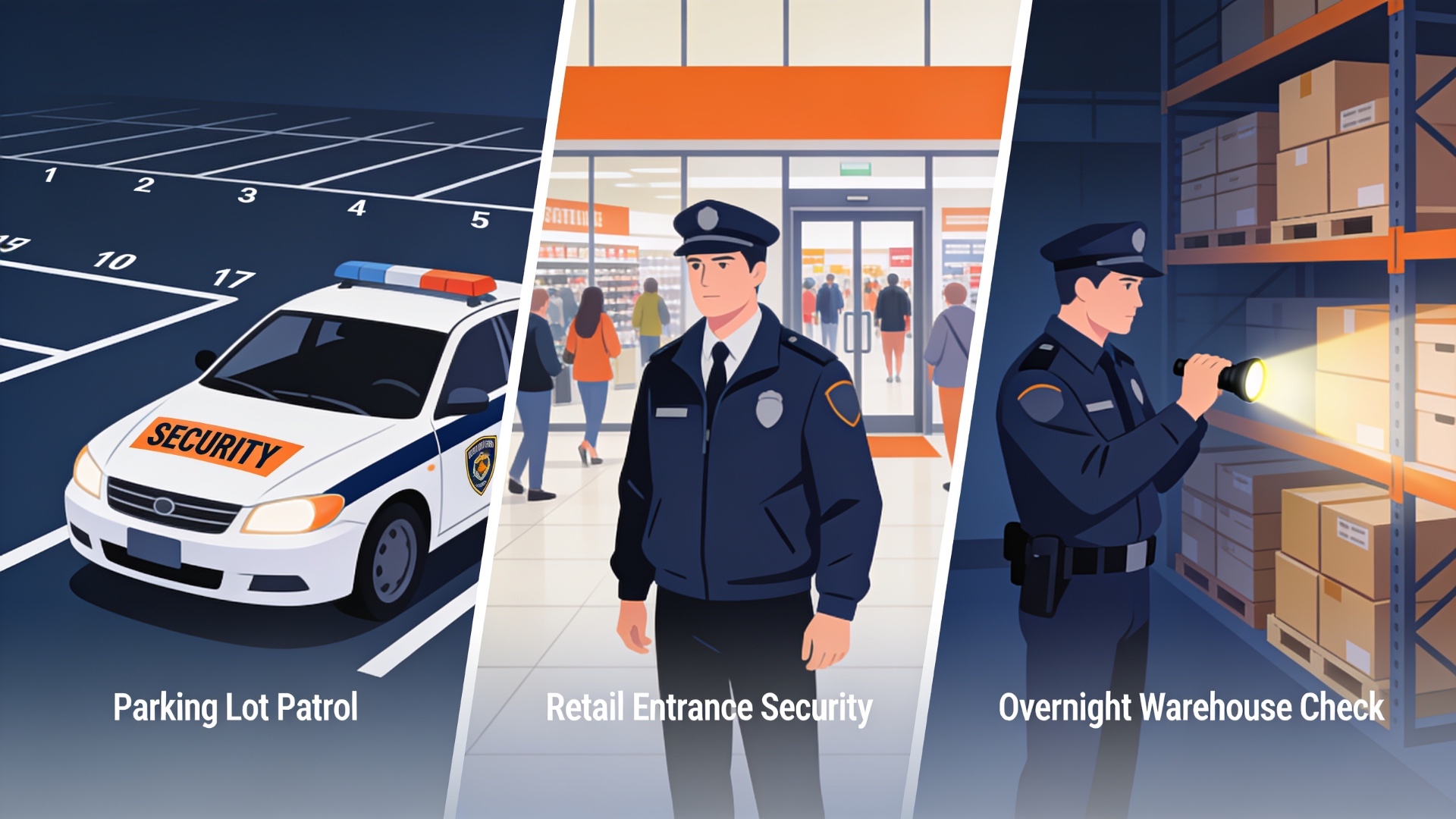
Notice that no single option covers every risk equally well. That's why plenty of businesses mix two, like mobile patrol for the parking areas paired with static coverage during peak retail hours.
What Happens If You Ignore These Warning Signs?
Ignore these signs and they escalate. Unaddressed vulnerabilities keep pulling in repeat attention from opportunists. A property with one unresolved break-in attempt is statistically more likely to get targeted again, especially if those same access points are still sitting there wide open.
The financial hit isn't only from stolen goods or busted property. Businesses that blow off documented safety concerns open themselves up to liability claims from employees or customers who get hurt on-site. Insurers pile on too — jacking up premiums after repeated claims or declining to renew altogether. The owners who treat early warnings as isolated nuisances almost always pay more in the end. Dollars, downtime, reputation — way more than the folks who spotted the pattern and acted on it.
FAQ: Business Security Signs and Patrol Services
What are the most common signs that a break-in is coming?
Forced entry marks on doors or windows, a disabled or tampered alarm, people loitering near your entrances repeatedly, and any prior break-in attempt — even a failed one. These rarely show up alone. Once you've got two or more, do a security review right away.
What does professional security patrol actually cost for a small business?
It varies with patrol type, frequency, and location. Scheduled mobile drive-by checks in Sacramento start at $15/visit. Event coverage is typically priced per hour, while ongoing commercial patrol is billed monthly based on checks or hours. Request a site-specific quote for real numbers.
Can't I just use cameras instead of hiring patrol?
No. Cameras are reactive by design — they capture what happened after the fact. Patrol adds the proactive layer cameras can't: someone physically walking the property, responding to alarms, and scaring off trouble just by being visible.
How fast can we get patrol going once we notice a problem?
Most providers — Stormhammer Security included — can get coverage started within days of a site assessment. Same-day starts are standard on signed agreements before 5 PM in Sacramento.
Do property management companies need a different setup than a single business owner?
Yes. Property managers juggle multiple buildings, tenants, and shared common areas, so they need coordinated scheduling across the portfolio — usually a mix of mobile patrol for outdoor and parking areas plus targeted overnight checks for buildings with higher vacancy or after-hours risk.
Spotting these ten signs early puts you in the driver's seat instead of cleaning up after a loss that already happened. Patterns matter more than one-off incidents, and a visible, professional patrol presence is still one of the best deterrents money can buy. Call Stormhammer Sacramento dispatch at (530) 902-9390 for a same-day patrol assessment.
Frequently Asked Questions
What are the most common signs that a break-in is coming?+
Forced entry marks on doors or windows, a disabled or tampered alarm, repeat loitering near entrances, and any prior break-in attempt — even a failed one. Two or more of these signals should trigger an immediate security review.
What does professional security patrol cost for a small business?+
Scheduled mobile drive-by patrol in Sacramento starts at $15/visit. Event coverage is priced per hour and ongoing commercial patrol is billed monthly based on checks or hours. Request a site-specific quote for a real number.
Can I just use cameras instead of hiring patrol?+
No — cameras are reactive and only record what already happened. Patrol adds the proactive layer cameras can't: an officer physically walking the property, responding to alarms, and deterring trouble by being visible.
How fast can patrol start once we notice a problem?+
Stormhammer typically starts coverage within days of a site assessment, and same-day starts are standard on signed agreements before 5 PM in Sacramento.
Do property management companies need a different setup than a single business owner?+
Yes. Multi-site portfolios need coordinated scheduling — usually a mix of mobile patrol for outdoor and parking areas plus targeted overnight checks for buildings with higher vacancy or after-hours risk.