Case Study: Reducing Break-Ins by 60% with Nightly Patrols
A mid-sized retail center in Sacramento cut its nighttime break-ins by 60% in six months, and it didn't take some expensive tech overhaul to do it. It took a security guard in a car showing up at random hours. That's the whole story, more or less, though the details are where it gets interesting.
I'm writing this up for the people I keep having the same conversation with: small business owners, property managers, and event planners who are staring at a patrol service quote wondering if it's actually worth the money. Fair question. So here's a real property, real numbers, and what actually changed. The short version is that a visible, unpredictable, consistent nightly presence, combined with some better lighting and actual incident documentation, turned a place that was getting hit almost twice a month into one of the safer properties in its area. Below I'll walk through what was broken, what got fixed, and what the before-and-after looked like.
Table of Contents
- Background: A Retail Center Under Siege
- Security Patrol Case Study: Identifying the Root Causes
- The Nightly Patrol Strategy That Was Implemented
- Security Patrol Case Study: The Results After Six Months
- Why Nightly Patrols Work Better Than Cameras Alone
- Cost Comparison: Patrols vs. Other Security Options
- Lessons for Other Property Owners
- Frequently Asked Questions
Background: A Retail Center Under Siege
Over one twelve-month stretch before hiring a patrol service, this 14-tenant strip center in the Arden-Arcade area of Sacramento racked up 22 reported break-ins, attempted break-ins, or acts of vandalism. Do the math and that's almost two incidents a month. Insurance renewals were getting pricier, and prospective tenants were walking away because nobody wants to sign a lease somewhere they'll be replacing point-of-sale gear every few weeks.
The tenant mix was pretty standard suburban stuff: a boutique clothing shop, a nail salon, a smoke shop, a small grocery, plus a handful of office-service tenants. Decent daytime foot traffic. But after 9 p.m.? Dead. Like a lot of these centers, it had a shared parking lot, a few unlit rear entrances used for deliveries, and one camera system that basically nobody was watching in real time. Management had budgeted for reactive maintenance and keeping the cameras running, and that was it. They'd never hired a dedicated patrol because ownership figured cameras were enough of a scare factor on their own.
They weren't. By the time someone finally called for outside help, a couple of tenants were quietly talking about breaking their leases, and one had already filed a claim after thieves smashed a rear window and made off with register equipment. And honestly, this isn't a Sacramento problem, it's an everywhere problem. The National Retail Federation's annual Retail Security Survey puts external theft, organized retail crime, and property damage near the top of retailers' financial worries year after year. Smaller strip centers with nobody on-site overnight tend to get it worst, for the obvious reason: there's literally no one around to notice something's wrong while it's actually happening.
Security Patrol Case Study: Identifying the Root Causes
Before anyone got hired to drive around, the patrol company ran a full risk assessment to figure out why this place kept getting picked, and the findings were textbook for an under-protected commercial site. Four things stood out: totally predictable dead time after closing, garbage lighting near the rear entrances, a camera system nobody monitored, and zero visible deterrent of any kind between 8 p.m. and 6 a.m.
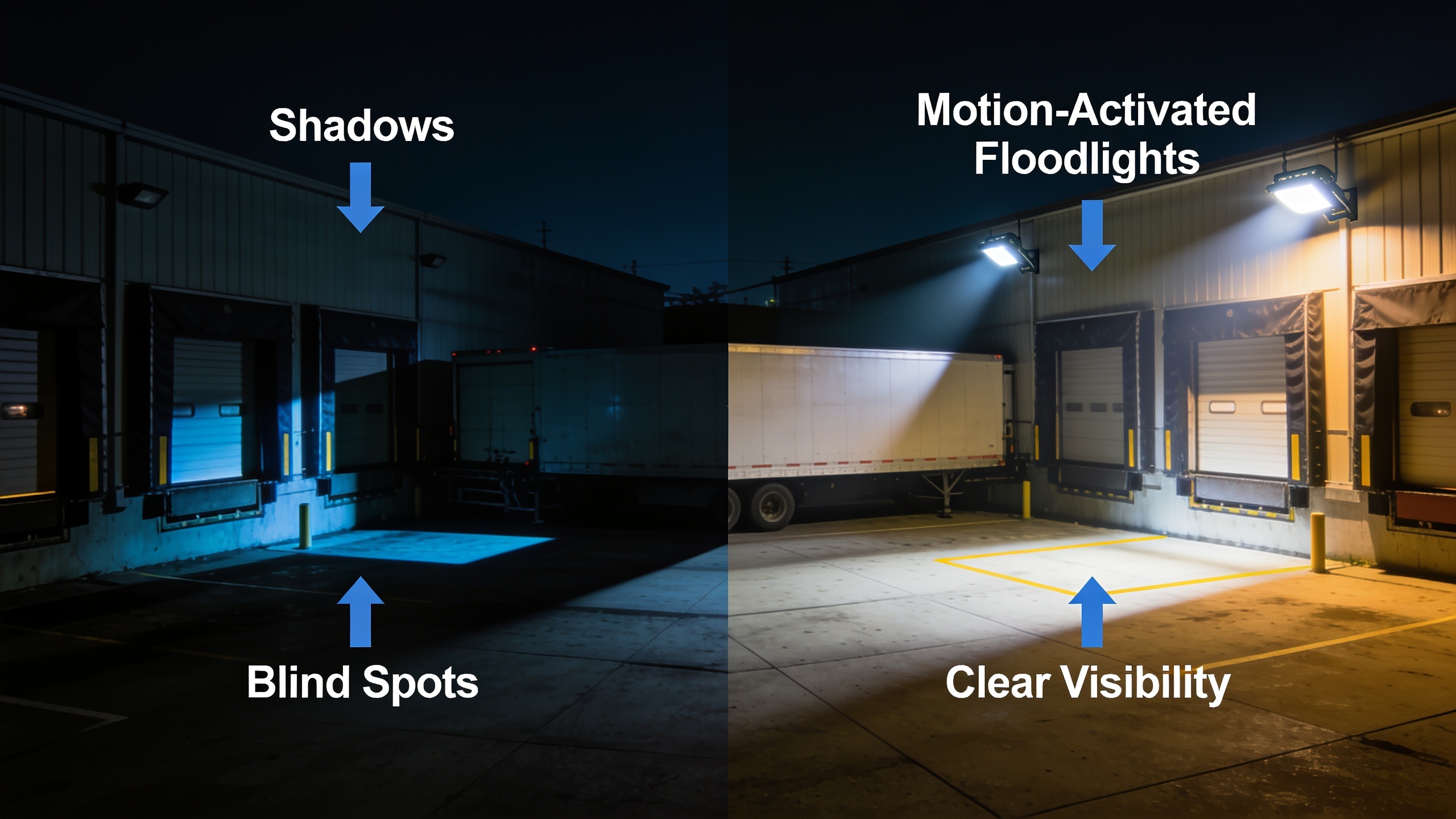
Lay the incident reports side by side and the pattern jumps out at you. Roughly 80% of the break-ins happened between midnight and 4 a.m., which is exactly when the lot was empty and the nearest occupied building was a few hundred feet away. The targets were almost always the rear service doors and loading areas, tucked out of view from the street, lit by a single working fixture across four business bays. One fixture. And here's the part that really got me: in several cases the same broken window sat boarded up with plywood for days before anyone repaired it. If you're an opportunist casing the block, plywood is basically a sign that says "nobody's paying attention, come back."
That slow-repair, no-presence, unlit-corners combo is a classic early warning sign, and it's something I dug into more in a related piece on the red flags that tell you a property needs help: 10 Warning Signs Your Business Needs Security Patrol. Recurring vandalism, sluggish repairs, dark exterior spots, no nighttime presence, those all point to a property that's being cased or is already known in local circles as an easy hit. This center was checking nearly every box at once. Which is exactly why things escalated so fast.
The Nightly Patrol Strategy That Was Implemented
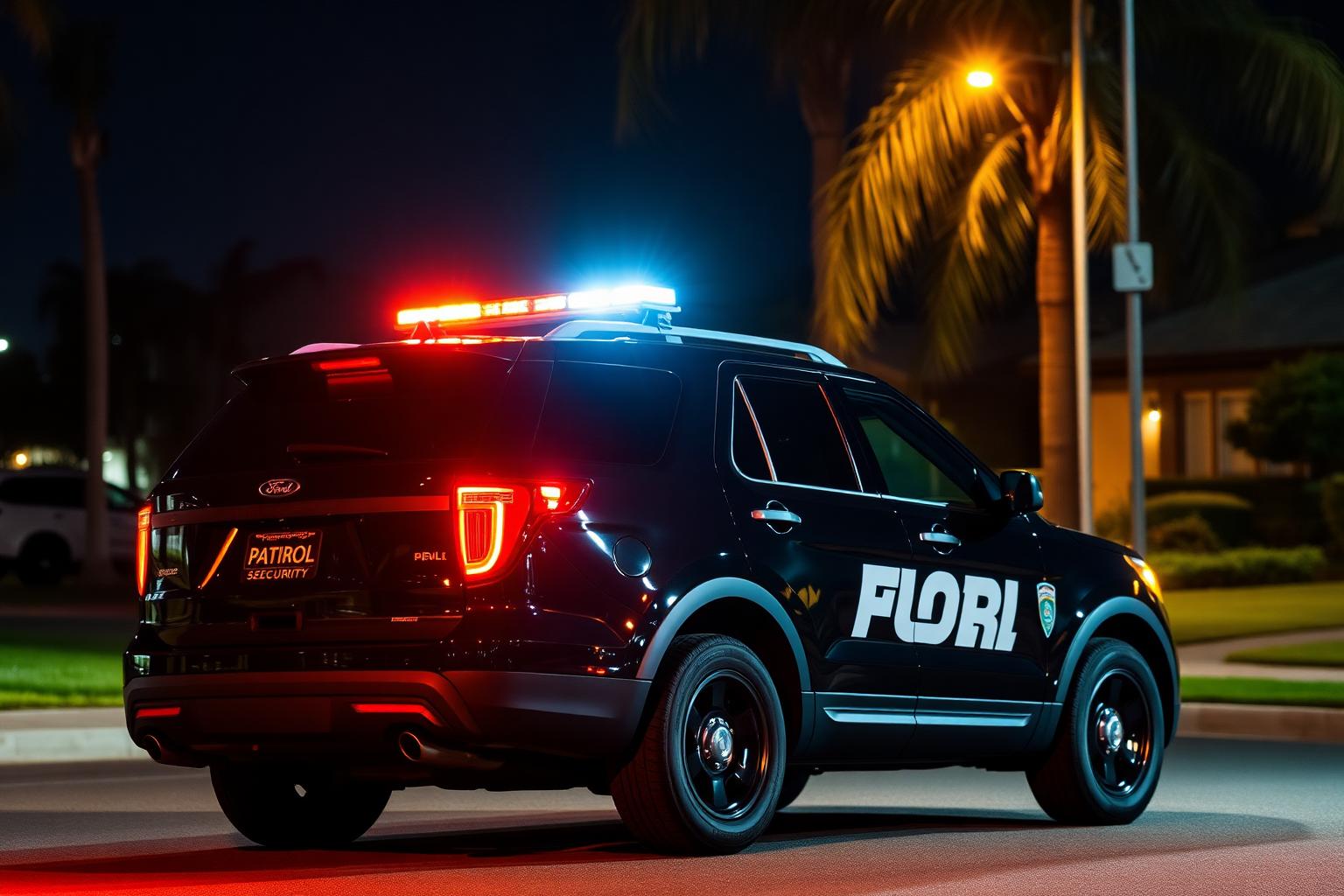
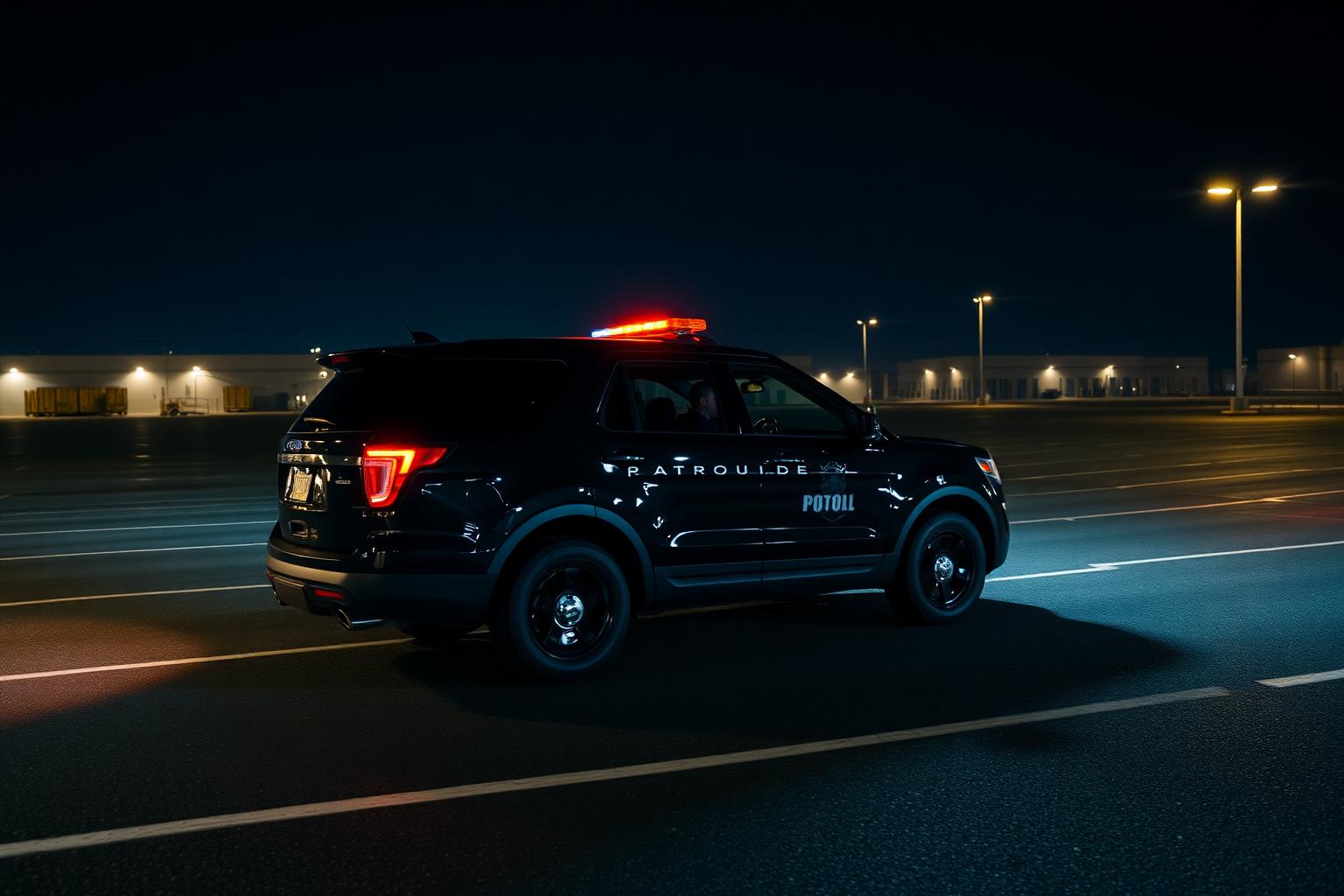
The fix boiled down to one core idea: a scheduled but deliberately unpredictable nightly mobile patrol, backed up by a few environmental fixes and a real communication line between officers, tenants, and local police. Not one fixed check per night. The patrol company built a randomized schedule with multiple drive-throughs and walk-arounds every night, so nobody watching from the outside could ever guess when the vehicle would show.
Random Timing, Multiple Passes
Instead of a single visit at a set hour, the property got at least four to six unscheduled passes a night, spaced out irregularly between 8 p.m. and 6 a.m. Officers switched between drive-bys of the parking lot perimeter and full walking inspections of the rear service corridors, where most of the previous incidents had gone down. This is the whole game, really. Criminals casing a spot are hunting for a pattern they can plan around. Take away the pattern and you take away most of their confidence.
Better Lighting, Cleaner Sightlines
On the officers' recommendation, management replaced four broken fixtures near the loading docks and added two motion-activated floodlights over the darkest blind spots. Lighting is one of those unglamorous, cheap fixes that punches way above its weight. It also made the officers' jobs easier, because now they could clock something sketchy from across the lot instead of having to walk right up on it.
Reports and Fast Escalation
Every pass got logged with a timestamped report sent straight to management, and officers could hit up the Sacramento Police Department's non-emergency and emergency lines the second they saw something off. That paper trail didn't exist before, at all. Suddenly tenants had documented proof of active security, which turns out to be gold for insurance renewals and lease negotiations.
If you're a property manager juggling multiple sites rather than one retail strip, the same logic applies, and I get into that in How Property Management Companies Benefit from Routine Patrols. Consistency, documentation, fast escalation, those matter just as much for apartment complexes and mixed-use developments as they do for a strip mall. The deterrence mechanics don't care what kind of building it is: visibility, unpredictability, accountability. Same recipe every time.
Security Patrol Case Study: The Results After Six Months
Six months in, the center logged just 5 incidents versus 12 over the same stretch the year before, a drop of a little over 58% that management rounded to the "60% reduction" number once the full twelve-month comparison wrapped up. None of this is surprising if you buy the basic premise of deterrence-based security: an active human presence changes how offenders behave in ways a passive camera just can't touch.
Here's the full before-and-after data.
| Metric | 12 Months Before Patrols | 12 Months After Patrols | Change |
|---|---|---|---|
| Total break-in/vandalism incidents | 22 | 9 | -59% |
| Incidents between midnight–4 a.m. | 18 | 4 | -78% |
| Average repair cost per incident | $1,850 | $1,850 | No change (cost per incident stable) |
| Tenant-reported safety complaints | 11 | 2 | -82% |
| Insurance claims filed | 6 | 2 | -67% |
| Average police response time reliance | High (sole trigger) | Low (patrol pre-empted most calls) | Improved |
The numbers are one thing, but tenants also just felt different about locking up after dark. Two of them who'd been muttering about breaking their leases decided to renew, and they pointed straight to the patrol vehicle and the better lighting as the reason. Management also mentioned that insurance underwriters liked seeing the documented patrol logs at the next renewal, which is a financial win that almost nobody factors in when they're deciding whether patrols are "worth it."
One thing worth calling out: the per-incident repair cost barely budged. A busted window costs about the same to fix no matter when it gets busted. What dropped was frequency, and that's the entire point. Fewer incidents means fewer repair bills, fewer claims, less headache. That's where the money actually comes back to you.
Why Nightly Patrols Work Better Than Cameras Alone
Cameras tell you what already happened. Patrols stop it from happening in the first place, because there's an actual unpredictable human on-site in real time. That single distinction explains most of the results here, and it's why so many properties with cameras on every corner still keep getting robbed.
Look, cameras are genuinely useful. Evidence, insurance claims, IDing repeat offenders, all real value. But a camera can't move to check out a weird noise, can't physically get in someone's way, and does nothing to deter a guy who assumes the footage will just get reviewed later. If it even gets reviewed at all, because plenty of small-business camera setups sit there unwatched. A patrol officer is a different animal entirely: an immediate, unpredictable obstacle. Offenders want the path of least resistance, and a marked patrol car rolling through on an unscheduled pass closes that path.
I'm not saying rip out your cameras. The best setups run both. The Sacramento center kept its camera system and used it alongside the patrol reports to build a fuller picture of what was happening on-site. But the patrols are what actually changed offender behavior.
Cost Comparison: Patrols vs. Other Security Options
The most cost-effective option really does depend on your property's size, history, and budget, but for mid-sized commercial properties, nightly mobile patrols usually beat both standalone cameras and 24/7 on-site guards on return. Here's a rough comparison of the common choices for a typical mid-sized retail or property-management scenario.
| Security Option | Approximate Relative Cost | Deterrence Level | Response Capability | Best Fit |
|---|---|---|---|---|
| Camera systems only | Low-Moderate | Low (passive) | None (documentation only) | Small budgets, evidence needs |
| Nightly mobile patrols | Moderate | High | Fast (real-time on-site response) | Retail centers, HOAs, event venues |
| 24/7 on-site guard | High | Very High | Immediate | High-risk or high-traffic properties |
| Alarm systems only | Low | Moderate | Delayed (relies on responder arrival) | Single-tenant buildings |
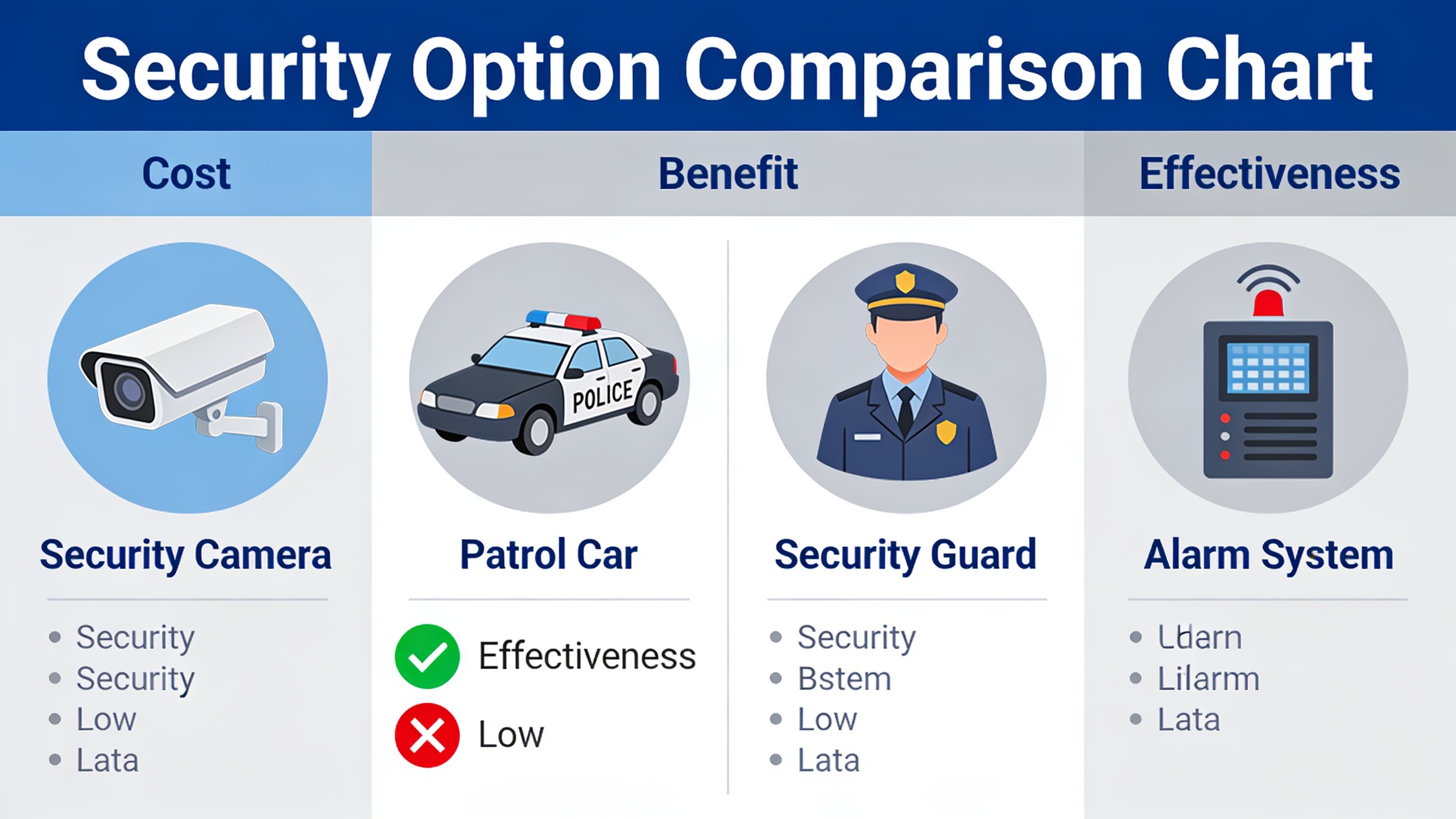
For this particular center, a round-the-clock on-site guard was just too expensive given the tenant mix and what the rent roll could support. Cameras alone had already flopped. Nightly patrols hit the sweet spot: cheap enough that a multi-tenant strip could split it as a shared common-area expense, active enough to move the numbers inside a single fiscal quarter.
Lessons for Other Property Owners
If you take one thing from this, take this: it's consistency and unpredictability that cut break-ins, not just showing up. A patrol that rolls in at the exact same time every night is barely better than nothing, because anyone paying attention just plans around it. Random timing, multiple passes, and visibly working the problem areas (like those pitch-black loading docks) are what turn a patrol contract into a real deterrent instead of a line item.
If you're weighing this, start with an honest incident audit, same as this center did. Pull twelve months of incident reports, insurance claims, and tenant complaints and actually lay them out. You'll usually spot patterns you'd never remember on your own, like incidents clustering around a specific hour or a specific door. Pair that with the cheap environmental stuff (lighting, sightlines, fixing damage fast) and you'll get a lot more out of whatever patrol program you layer on top.
And don't forget the indirect payback. Security spending often earns its keep through tenant retention, lower premiums, and reduced legal exposure, not just avoided repairs. In this case, two lease renewals that probably wouldn't have happened otherwise arguably covered a chunk of the annual patrol contract by themselves. That's easy to miss when you're staring at the sticker price. But it's often the whole difference between a security budget that feels like money down the drain and one that's clearly protecting your revenue.
Last thing. Not every property needs the same intensity. A sleepy suburban office park might be fine with a couple passes a night, while a strip with a documented history like this one might need four to six. A decent security provider should walk you through a tailored assessment instead of shoving a one-size-fits-all package at you.
Frequently Asked Questions
How fast will patrols actually reduce break-ins?
Most properties see a measurable dip within 60 to 90 days of consistent, randomized nightly patrols. The full effect, like the 60% year-over-year drop here, usually takes a six-to-twelve-month cycle, since offenders need time to figure out the property's risk profile has changed.
Is a mobile patrol better than one overnight guard?
Depends on the size and layout. A single stationary guard covers one spot well but can't watch a big lot, several entrances, and a sprawling multi-tenant site all at once. Mobile patrols making multiple random passes across the whole property tend to give broader, less predictable coverage for retail centers, apartment complexes, and similar setups.
What's in a typical patrol report?
Timestamps for each pass, notes on anything suspicious, confirmation that doors, windows, and gates were locked, any lighting or maintenance problems they spotted, and immediate notes on anything that needed police follow-up. Bonus: these reports double as solid documentation for insurance renewals and tenant communications.
Do patrols help with insurance?
A lot of insurers look favorably on documented, consistent security when they're underwriting or renewing, since it lowers the odds and cost of future claims. Specific discounts vary by carrier, but the management company here reported a smoother renewal and fewer claim headaches after starting patrols.
What does a patrol service run for a small retail center?
It varies with property size, how many nightly passes you want, and local labor rates, but patrol contracts are usually a predictable monthly or per-visit fee, way cheaper than staffing a 24/7 guard. Get a site-specific quote built on an incident review and risk assessment instead of trusting some generic online estimate.
This center didn't fix its break-in problem with one silver bullet. It combined consistent, unpredictable nightly patrols with some practical lighting and sightline work and actual documentation, and the numbers did the talking. If you're a business owner, property manager, or event planner watching your own incident count creep up, the formula's the same: visibility, unpredictability, and follow-through. That's how you turn a soft target into a property criminals learn to skip.