
How Property Management Companies Benefit from Routine Patrols
Property Management Security That Protects NOI
If you manage more than one property, you already know the feeling: the 2 a.m. call about a broken gate, the Monday email about graffiti in the parking garage, or the resident who says the community no longer feels safe. Routine security patrols help prevent those issues before they become insurance claims, tenant complaints, or expensive repairs.
This guide explains how scheduled, marked patrols help property management companies reduce premises liability exposure, control vandalism costs, and improve tenant retention across multifamily, commercial, HOA, and mixed-use portfolios.
1. Routine Patrols Create Documented Duty of Care
Premises liability cases often come down to one question: did the owner or manager take reasonable steps to prevent foreseeable harm? A GPS-stamped, photo-verified patrol log is one of the clearest records you can provide to ownership, insurance carriers, or legal counsel.
- Every patrol tour is time-stamped at each checkpoint.
- Incidents are documented with notes and photos.
- Reports support claims, maintenance follow-up, and resident communication.
2. Patrols Reduce Vandalism and After-Hours Damage
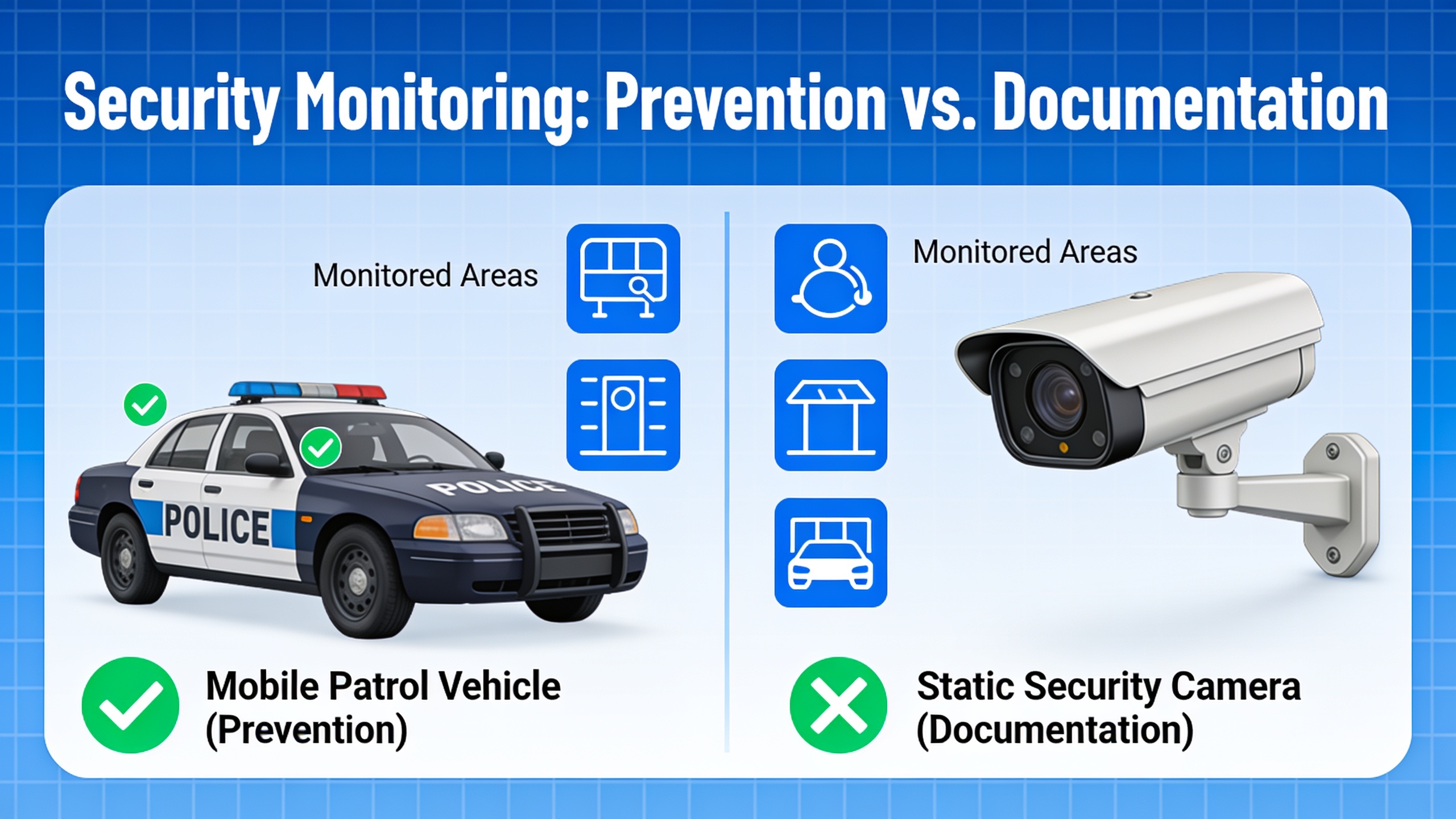
Vandalism rarely starts as a major loss. It starts with tagging, broken lights, trespassers, dumped furniture, or people testing gates and doors. Marked patrol vehicles interrupt that opportunity cycle before it turns into repeated property damage.
3. Residents Renew Where They Feel Safe
Tenant retention is cheaper than vacancy. Residents notice whether a property feels monitored after dark, especially in parking lots, garages, mail areas, laundry rooms, and common walkways. Visible patrol presence helps reassure residents while discouraging nuisance activity.
4. Mobile Patrol Often Beats a Static Post
For many managed portfolios, scheduled mobile patrol is more efficient than placing one static guard at one location. A mobile patrol route can cover multiple nearby properties with randomized timing, visible deterrence, lock checks, parking enforcement support, and incident reporting.
For a deeper comparison, see Mobile Patrol vs Static Guard: Which Fits Your Business?.
5. Vet the Vendor Like a Critical Property Partner
Before choosing a patrol provider, confirm licensing, insurance, reporting quality, escalation procedures, portfolio pricing, and whether the company can support multiple addresses under one account manager.
Community Business Resources
For additional community partner resources, visit DM Plumbing & Heating, Digital Fusion Hub, Medinex, and RobinRank.
Frequently Asked Questions
How often should a patrol visit each property?
Most multifamily and commercial sites benefit from multiple randomized visits during the highest-risk overnight windows.
Do patrols replace cameras?
No. Cameras record activity, while patrols add visible deterrence, reporting, and real-time response.
Can one vendor cover multiple properties?
Yes. A single regional patrol provider can often support an entire Sacramento-area portfolio with one reporting standard and one account contact.