
Property Management Security: How Routine Patrols Reduce Liability, Vandalism, and Tenant Complaints
If you manage property, security is basically what it sounds like: keeping your apartment complexes, office parks, retail centers, and mixed-use buildings safe by being visibly present, instead of just cleaning up messes after they happen. And for anyone running more than one site, routine patrols are one of those rare investments that hit three targets at once. They lower your liability, cut your vandalism and theft losses, and (this part surprises people) actually keep tenants happier. I''ll walk through how all that works, what it costs, and how to figure out whether it makes sense for your particular portfolio.
Here''s what I''ve noticed after years around this stuff: property managers are stretched thin. You''re dealing with leasing, maintenance, vendor contracts, compliance, all of it. Security tends to sit in the corner getting ignored until the day something blows up. Big mistake. The National Council for Home Safety and Security has found that commercial and multifamily properties without a visible security presence get hit with break-ins and property crime at noticeably higher rates than places with regular patrols or on-site guards. Prevention just costs less than cleanup. It almost always does.
Table of Contents
- What Is Property Management Security and Why Does It Matter?
- How Do Routine Security Patrols Reduce Liability for Property Managers?
- What Is the Real Cost of Vandalism and Theft Without Patrols?
- How Routine Patrols Reduce Tenant Complaints
- Mobile Patrols vs. Static Guards: Which Model Fits Multi-Site Portfolios?
- How Much Does Property Management Security Cost?
- Choosing the Right Property Management Security Partner
- Frequently Asked Questions
What Is Property Management Security and Why Does It Matter?
Property management security is any systematic way of protecting a managed property''s residents, tenants, assets, and buildings, whether that''s patrols, cameras, access control, or people on-site. For companies running multiple buildings, it usually means hiring a licensed provider to do scheduled checks, respond to alarms, and document conditions across every location you oversee.
The thing that makes this different for portfolio managers is that risk stacks up. It compounds. One badly lit parking garage that nobody''s watching can hand you a slip-and-fall claim, a catalytic converter theft ring, and a run of vehicle break-ins all in the same month. Now picture that happening across ten or fifteen properties. Suddenly you''re not dealing with the occasional headache. You''ve got a full-time liability problem on your hands.
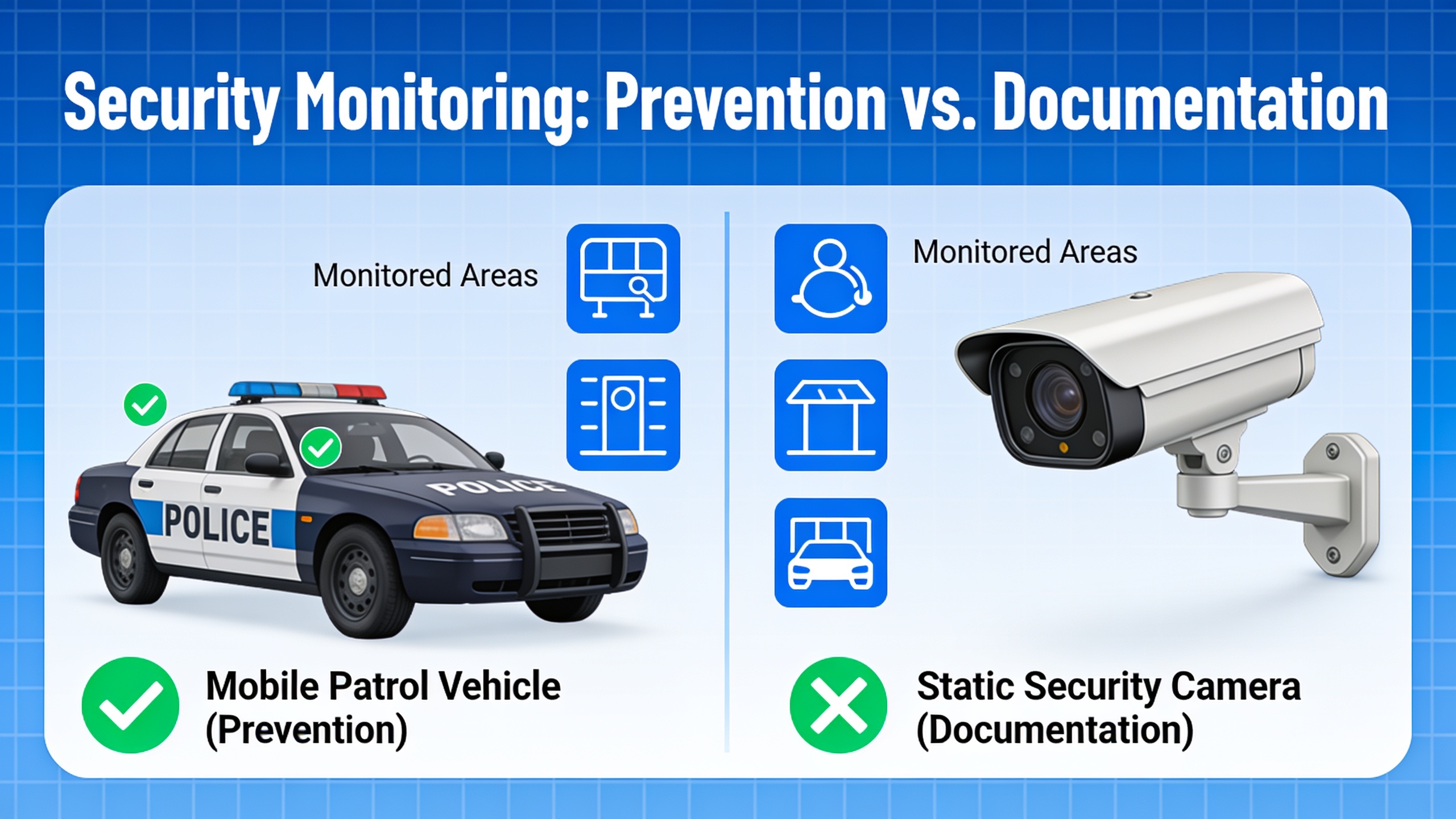
Routine patrols fix this by putting a body (or a marked vehicle) through your common areas, parking structures, loading docks, and perimeter fencing on a schedule. And the schedule matters. You want it frequent enough to scare off the opportunists but varied enough that nobody can set their watch by it. Cameras, by comparison, are great at showing you what already happened. They almost never stop it while it''s happening.
How Do Routine Security Patrols Reduce Liability for Property Managers?
Routine patrols reduce liability by building a documented record of due diligence, catching hazards before they hurt someone, and setting a consistent standard of care that courts and insurers actually recognize. When you can prove a licensed patrol checked a site multiple times a night, every night, that record becomes a shield against premises liability claims.
Premises liability law basically says property owners and managers have to keep conditions "reasonably safe." That word "reasonable" is carrying a lot of weight in a courtroom, and judges tend to look hard at what you had in place when the incident happened. A property with zero patrol history, no incident logs, nothing? That''s a weak spot. Compare that to one that can pull up timestamped patrol reports showing lighting checks, gate inspections, hazards flagged. Night and day.
Documentation as a Legal Shield
Most professional patrol services spit out a digital log for every single visit. Broken lights, damaged fencing, standing water, someone lurking around who shouldn''t be. That paper trail earns its keep in a few situations.
If someone slips and falls or gets hurt, those logs showing regular hazard checks help prove you acted reasonably, which shifts the whole conversation toward whether the problem got reported and fixed fast. On the insurance side, carriers are asking for security documentation more and more when they underwrite commercial or multifamily policies, and some will knock money off your premium if you''ve got a verified patrol contract. And if a crime actually happens on-site, having that patrol history helps show the place wasn''t just left unguarded, which can cap the third-party claims victims might bring against you.
Honestly, the same logic runs through every part of property management. You wouldn''t sit around waiting for a pipe to burst before calling in a firm like Dmplumbingheating for maintenance, right? Waiting for a crime before you add patrols is the same trap, just more expensive and legally dicier. Preventive contracts, whether it''s plumbing, HVAC, or security, cost less than emergency calls and the lawsuits that follow. Every time.
What Is the Real Cost of Vandalism and Theft Without Patrols?
The real cost of vandalism and theft on unpatrolled properties runs way past the repair invoice. You''ve got direct repair bills, insurance deductibles, lost rent from damaged units, and the slippery one to measure: tenants who leave because they don''t feel safe. If you''re only counting the repair invoice, you''re kidding yourself about the total damage.
Take a 150-unit apartment complex. One graffiti hit on a parking structure might run you $800 to $2,500 to clean up, depending on the surface and the paint. Fine, manageable, whatever. But vandalism almost never happens once and stops. Properties that get tagged and do nothing visible about it tend to get tagged again within weeks, because doing nothing sends a message. It tells the opportunists you''re an easy mark.
| Cost Category | Unpatrolled Property (Annual Estimate) | Property with Routine Patrols (Annual Estimate) |
|---|---|---|
| Vandalism repair costs | $8,000–$15,000 | $1,500–$4,000 |
| Theft-related losses (packages, vehicles, equipment) | $5,000–$12,000 | $1,000–$3,000 |
| Insurance premium adjustments | Standard or elevated rate | Potential discount for documented security |
| Tenant turnover attributed to safety concerns | 3–8% of units annually | 1–3% of units annually |
| Legal/liability claim exposure | Higher, undocumented risk | Lower, documented due diligence |
Now, those numbers are illustrative ranges pulled from typical property management cost patterns, not one specific study, so take them as directional. But they line up with what everyone in this business sees: prevention is cheaper than remediation, and the gap only gets wider the longer a property sits unwatched. The Insurance Information Institute has pointed out the same thing, noting that commercial property crime losses tend to cluster in spots with no active deterrent. Which reinforces the whole point. A visible presence changes how offenders behave. Cameras alone don''t.
And there''s a reputation cost that never shows up on any invoice. People research crime history and read reviews before they sign a lease now. A property with a visible pattern of vandalism or theft complaints is going to sit vacant longer and take more price concessions to fill. I''ve even seen tenant associations turn to platforms like Gofund.me to crowdfund repairs after vandalism blew past what insurance would cover. That''s a nightmare scenario, and it''s exactly the kind of thing you want to prevent by, you know, not letting the damage happen in the first place.
How Routine Patrols Reduce Tenant Complaints
Routine patrols cut tenant complaints by knocking out the root causes of frustration before they ever become formal complaints or lease disputes. Noise, people parking where they shouldn''t, sketchy common areas, slow responses. Satisfaction surveys keep showing that perceived safety is one of the top three things that decide whether someone renews, right up there with maintenance responsiveness and whether the rent feels worth it.
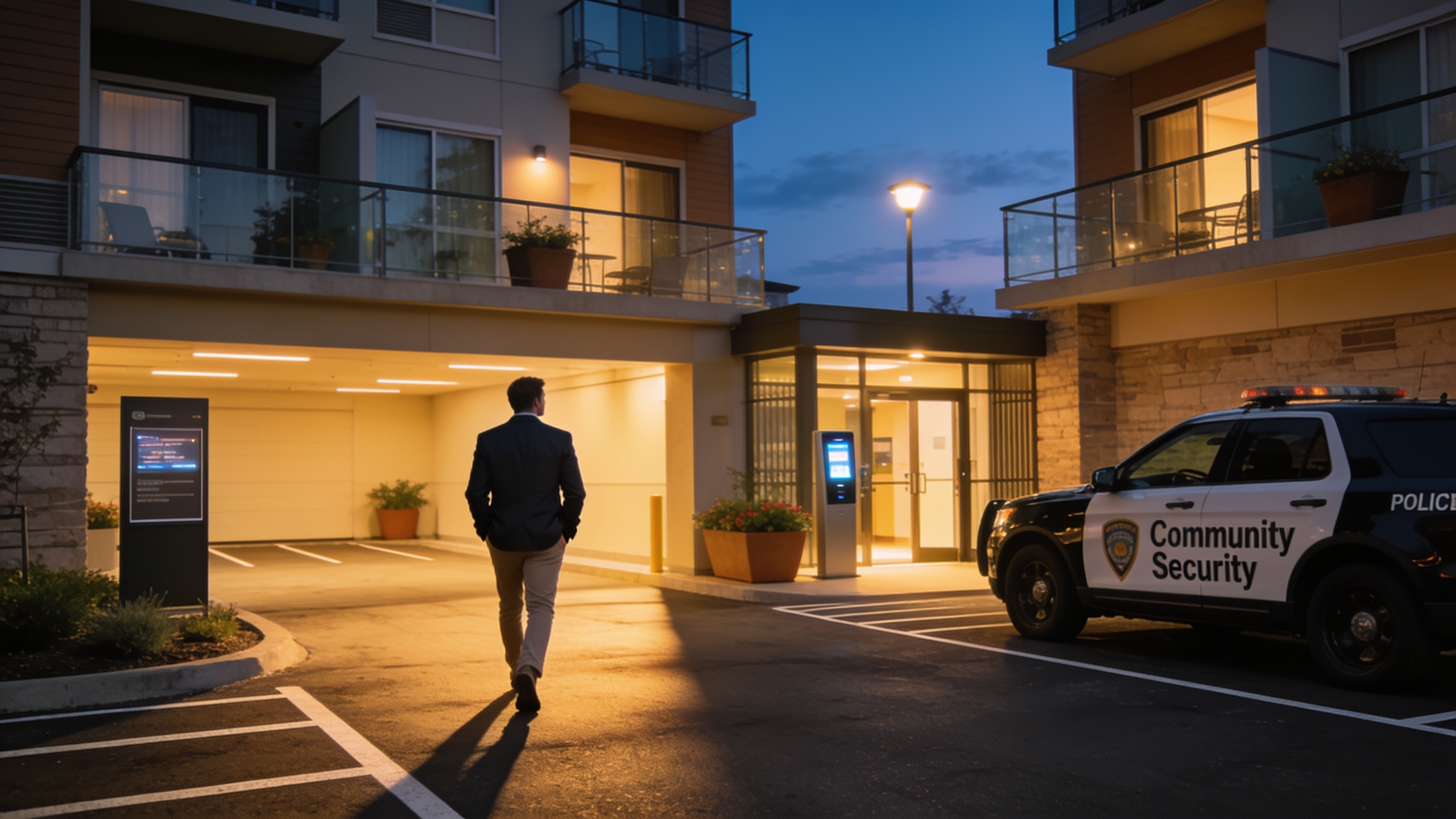
When there''s a visible patrol on-site, a bunch of stuff improves at once. Noise complaints drop because an officer can walk over and handle the 2 a.m. party directly instead of everything funneling through some poor on-call manager. Cars that don''t belong get flagged and towed per policy, instead of piling up in guest parking for a month. And, maybe the biggest one, people actually feel okay walking to their car after dark. That single change quietly kills off a lot of the "I don''t feel safe here" complaints that managers otherwise have almost no way to fix.
The Compounding Effect on Renewals
A tenant who files three or four safety complaints during a lease term is a lot less likely to renew. That''s the pattern the National Apartment Association keeps flagging in its renter satisfaction indexes, where safety and security show up as consistently ranked factors year after year. Run the math on a 200-unit property: even a modest 5% cut in turnover tied to people feeling safer, and the revenue you keep from avoided vacancy and re-leasing costs usually beats the annual patrol contract several times over.
There''s another benefit that''s easy to overlook. Patrols give your staff a buffer. Instead of the leasing office fielding every squabble about a barking dog or a broken gate or some stranger hanging around, the patrol team catches first response, logs it, and only bumps up to management the stuff that genuinely needs it. That frees your managers to do the actual job (leasing, retention) instead of moonlighting as security dispatchers.
Mobile Patrols vs. Static Guards: Which Model Fits Multi-Site Portfolios?
Mobile patrols and static guards do different jobs, and which one''s right for your portfolio really comes down to how many sites you''ve got, how big each one is, and what the risk looks like at each. A mobile patrol is a vehicle-based officer rotating through several properties on a semi-random schedule. A static guard just stays put at one location the whole shift.
If you''re managing a handful of properties spread across a city or region, mobile patrols usually win on cost, since one officer can cover ten to fifteen sites in a shift, hitting the parking areas, entry points, and common spaces at each stop. Static guards earn their spot at high-traffic commercial properties, big residential communities with one main entrance, or anywhere with a serious incident history that demands a body on-site constantly rather than checks every so often.
If you want the full operational and cost breakdown, including how to actually calculate the right patrol frequency for your portfolio, it''s worth reading Mobile Patrol vs Static Guard: Which Fits Your Business? before you sign anything long-term. Plenty of companies end up running a hybrid, honestly: static coverage during the worst hours (usually 10 p.m. to 4 a.m.) plus mobile checks during the day for the smaller satellite properties in the same portfolio. Best of both, if you can swing the budget.
How Much Does Property Management Security Cost?
Property management security usually runs $25 to $75 an hour for mobile patrol and $20 to $40 an hour for unarmed static guards, though the number moves around a lot based on your region, how often you want patrols, and whether the contract bundles in emergency response and reporting tech. Multi-site deals often come with volume discounts, because a provider can route one vehicle across several nearby properties way more efficiently than staffing each one alone.
For a mid-size portfolio, say five properties averaging 100 units each, a nightly mobile patrol hitting each site two or three times a shift might run $3,000 to $6,000 a month total, depending on your market and what''s included. Looks like a lot sitting there by itself. But stack it against the vandalism, theft, and liability figures from earlier, and most companies find the math tilts pretty clearly toward consistent patrols over reactive spending.
I''d shop around, though. Service quality and reporting rigor vary wildly even between providers charging about the same. There''s a decent side-by-side of how a regional provider compares to a national brand in Stormhammer Security vs brinks.com: Full Comparison, which digs into response times, contract flexibility, and pricing structures that specifically matter when you''re juggling multiple sites.
Factors That Move the Price
A few things really swing what you''ll pay. Patrol frequency is the obvious one: nightly checks cost less per visit than hourly rounds, but hourly rounds deter a lot better in high-risk spots. How your sites are clustered matters too, since a geographically tight portfolio gets better per-site rates than a bunch of scattered, isolated locations. Reporting tech (GPS-verified check-ins, photo documentation, digital incident reports) adds a modest premium but seriously strengthens your liability protection, so I''d rarely skip it. And bundling in alarm response and after-hours dispatch costs more up front but saves you from paying for a separate answering service.
Choosing the Right Property Management Security Partner
The right partner is one with licensed, insured personnel, transparent incident reporting, scheduling that flexes across your sites, and a real track record of showing up during actual emergencies, not just the routine walk-throughs. Treat picking this vendor as seriously as you''d treat choosing an insurance carrier or a major maintenance contractor, because the quality of your security provider feeds straight back into your liability.
First thing: verify licensing and insurance in your state. An uninsured or improperly licensed guard on your property can actually add liability instead of reducing it, which defeats the whole point. Ask for sample incident reports from current clients so you can see how thoroughly they document hazards, suspicious activity, completed checks. And specifically get references from other multi-site property management clients, because single-property residential security and portfolio-wide commercial coverage are honestly different animals when it comes to logistics and staffing.
Some companies, especially smaller ones without a dedicated risk or facilities person, don''t even know what to ask during vendor selection. Fair enough, it''s a specialized thing. Services like Advisorynavigator can match you with an advisor or consultant who''s already worked through these vendor-selection and risk-management headaches, which beats trial-and-error across a multi-year contract. Getting it right the first time saves you the pain of switching providers mid-contract, which leaves your properties exposed during the handoff.
One more thing worth saying: visible, well-marketed security is a leasing advantage all on its own. Companies that actually talk about their security investment (on the website, in leasing materials, in listings) tend to see it show up in inquiries and retention. Same way businesses lean on tools like RobinRank to make sure their content and services actually get found online, property managers should stop treating their security commitment as some hidden feature. Put it front and center in every listing and every renewal conversation.
Frequently Asked Questions
Do patrols actually lower my insurance premiums?
Some insurers do offer discounts or better terms for commercial and multifamily properties with documented, licensed patrol contracts, since a visible deterrent statistically lines up with fewer claims. Best move is to ask your carrier directly whether a patrol contract qualifies for a rate adjustment, because these vary a ton by carrier and region.
How often should a patrol officer check a property overnight?
Most multi-site contracts schedule two to four checks per property per overnight shift, though high-risk sites (recent break-ins, ongoing vandalism) often justify hourly checks. It really depends on the property''s size, layout, lighting, and incident history. There''s no universal number.
Can one security company cover multiple properties across a city?
Yep, and that''s honestly the main reason portfolio managers lean toward mobile patrols over static guards. A single vehicle can rotate through ten or more nearby properties in a shift, hitting common areas, parking structures, and entry points at each, which costs way less than staffing every site on its own.
What''s the difference between a security patrol and a courtesy officer?
A courtesy officer usually lives on-site (often for reduced rent) and handles minor tenant stuff, but typically doesn''t have formal security training or licensing. A routine patrol means licensed, trained people hired specifically to deter crime, document hazards, and respond by a real protocol. That gives you stronger liability protection than an informal courtesy setup.
Is it cheaper to hire in-house security than contract a patrol service?
For most portfolios, no. Contracting out is more cost-effective because the provider eats the recruiting, training, licensing, insurance, and scheduling overhead across all their clients. In-house only really pencils out for very large single-site properties that need round-the-clock staffing anyway.
At the end of the day, routine patrols aren''t some luxury line item. They''re a practical, measurable way to shrink your liability, keep vandalism and theft in check, and hold onto tenants who''d otherwise be scrolling listings for somewhere that feels safer. Managers who treat security as prevention instead of a reactive expense just come out ahead. On the balance sheet and the incident log both.